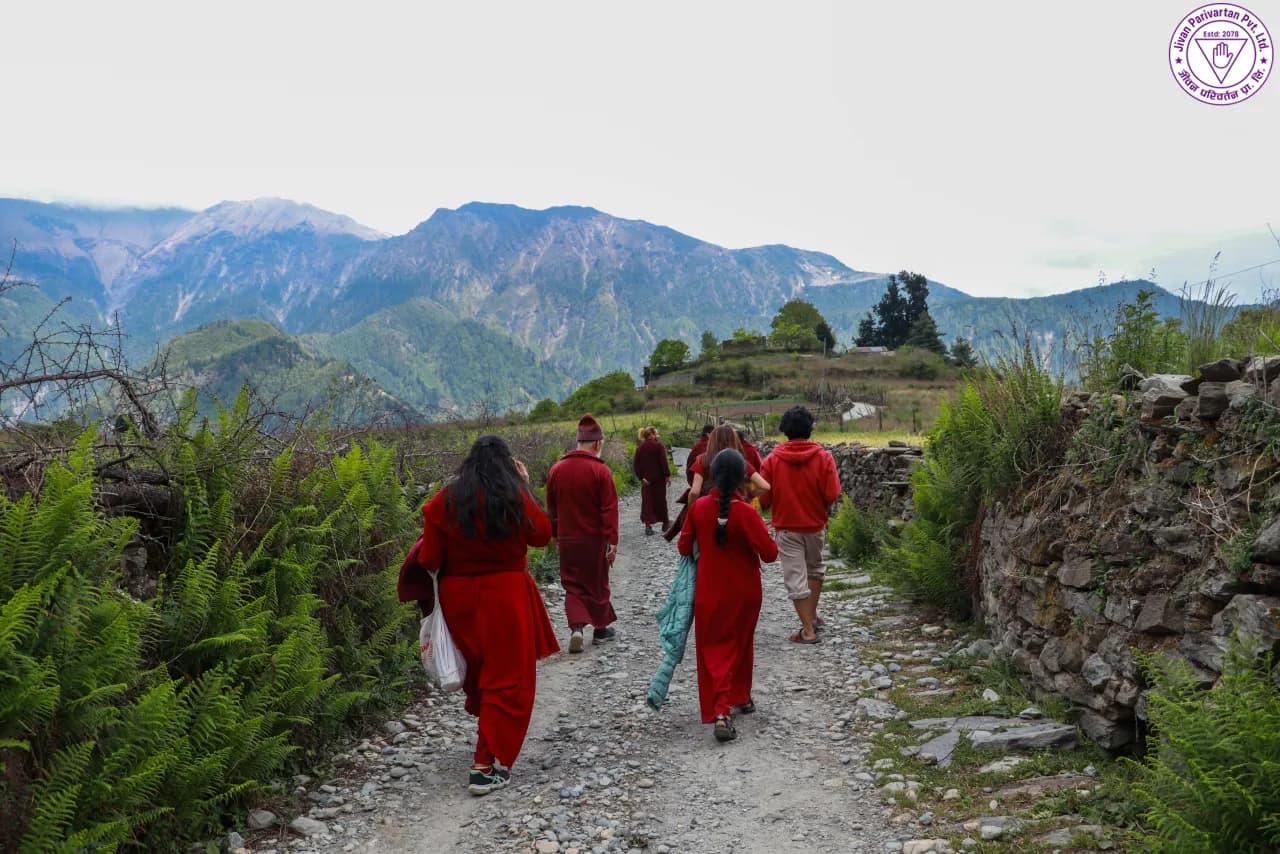
Why Nepal for Yoga
Nepal is the birthplace of the Buddha and the heart of the Himalayas, where yoga, meditation and energy healing have never been a trend but a living, daily tradition. It offers the depth of India with smaller crowds, lower prices and easier access to the mountains.

Founder & Spiritual Healer
Reviewed and updated June 2026
Is Nepal a good place to learn yoga?
Yes. Nepal sits at the meeting point of the Indian and Tibetan spiritual worlds, and both traditions have flowed through the Himalayas for centuries. Hatha yoga, tantra, pranayama, Buddhist meditation and Vedic ritual all have deep roots here, and many of the teachers you will meet were trained in lineages that pass directly from guru to student rather than through weekend certificate courses.
For a traveller, that means the practice you find in Nepal tends to be quieter and less commercial than in better-known yoga hubs. You are more likely to share a room with a handful of students than a hall of two hundred, and more likely to be taught philosophy and breath alongside posture. For many people that is exactly the point of coming.
What makes Nepal distinctive
A few things set Nepal apart from other yoga destinations.
The Himalayas on your doorstep
No other yoga destination puts you this close to the highest mountains on earth. The thin, clear mountain air and the silence of the foothills change a practice in a way that is hard to describe until you feel it.
A living spiritual culture
Temples, stupas and shrines are part of daily life, not museum pieces. Pashupatinath, Boudhanath and Swayambhunath are active places of worship where ritual still happens at dawn.
Affordability
Teacher training, retreats and healing in Nepal generally cost less than equivalent programs in Bali or the West, without cutting the depth of teaching. Your money goes further and stays in the local community.
Smaller groups
Most authentic centres here teach in small groups, so you get real attention from your teacher rather than being one face in a crowd.
Birthplace of the Buddha
Lumbini, in the Nepalese plains, is the birthplace of Siddhartha Gautama. Nepal has shaped the meditation traditions that yoga students travel the world to study.
Genuine warmth
Nepali hospitality is unhurried and sincere. You arrive as a guest and tend to leave feeling you were cared for, not processed.
Nepal compared with India and Bali
Each destination has its own character. This is an honest summary, not a sales pitch.
| Nepal | India (Rishikesh) | Bali | |
|---|---|---|---|
| Tradition depth | Very deep, Himalayan and Buddhist | Very deep, classical yoga | Modern, eclectic, wellness-led |
| Crowds | Quieter, smaller groups | Busy, large schools | Busy, very international |
| Cost | Low | Low | Moderate to high |
| Mountains | Unmatched Himalayan access | Himalayan foothills | No high mountains |
| Best for | Depth, mountains, healing | Classical study, scale | Comfort, social scene |
Nepal or India for yoga teacher training?
Both are excellent, and the honest answer is that it depends on what you want. India, and Rishikesh in particular, is the largest yoga-training destination in the world, with hundreds of schools and a vast choice of courses. That scale brings energy, but also crowds and a wide range of quality.
Nepal offers the same Himalayan roots in a calmer setting. If you want intimate group sizes, a strong emphasis on meditation and breath, and the option to combine your training with time in the high mountains, Nepal is hard to beat. At Jivan Parivartan our yoga teacher training in Kathmandu is taught in the Himalayan ashram lineage, in small groups.
Practise yoga in Nepal with us
At Jivan Parivartan in Kathmandu we offer 200-hour teacher training, Reiki and sound healing, daily meditation, and Himalayan retreats, all in the authentic Himalayan tradition. Whether you are coming for a week or a season, we can help you build the right itinerary.
Written by
Maa Nisha KabirFounder of Jivan Parivartan, Reiki Master and spiritual healer with 12+ years of sadhana, including two years in Himalayan cave retreat.
Plan your yoga trip to Nepal
Why Kathmandu for Yoga
The case for the Kathmandu Valley as your base.
Learn moreBest Time for Yoga in Nepal
A month-by-month guide to seasons and weather.
Learn moreNepal Visa for Yoga Travellers
Visa on arrival fees, durations and the process.
Learn moreYoga Teacher Training in Nepal
Choosing and preparing for YTT in Nepal.
Learn moreHimalayan Yoga in Nepal
What practising in the high mountains is really like.
Learn moreGetting to Kathmandu
Flights, the airport and onward transport.
Learn moreFrequently Asked Questions
Ready to practise yoga in Nepal?
Tell us what you are looking for and we will help you plan teacher training, a retreat or a healing stay in Kathmandu.