Trekkers Wellness Programme
Pre and Post Trekking Yoga Retreat in Nepal
A 3-day pre-trek programme to acclimatise you to altitude and prepare the trekking muscles, and a 3-day post-trek programme to release the load and integrate the journey. Book both for a combined 6 days at a 20% discount.
Why does a pre and post trekking yoga retreat exist?
The pre and post trekking yoga retreat exists because most international trekkers arrive in Nepal jet-lagged, fly straight into altitude, lose 3 days acclimatising on the trail, and then return tight, disrupted and emotionally raw. Three days at our Kathmandu centre before and after the trek turns that into a complete arc.
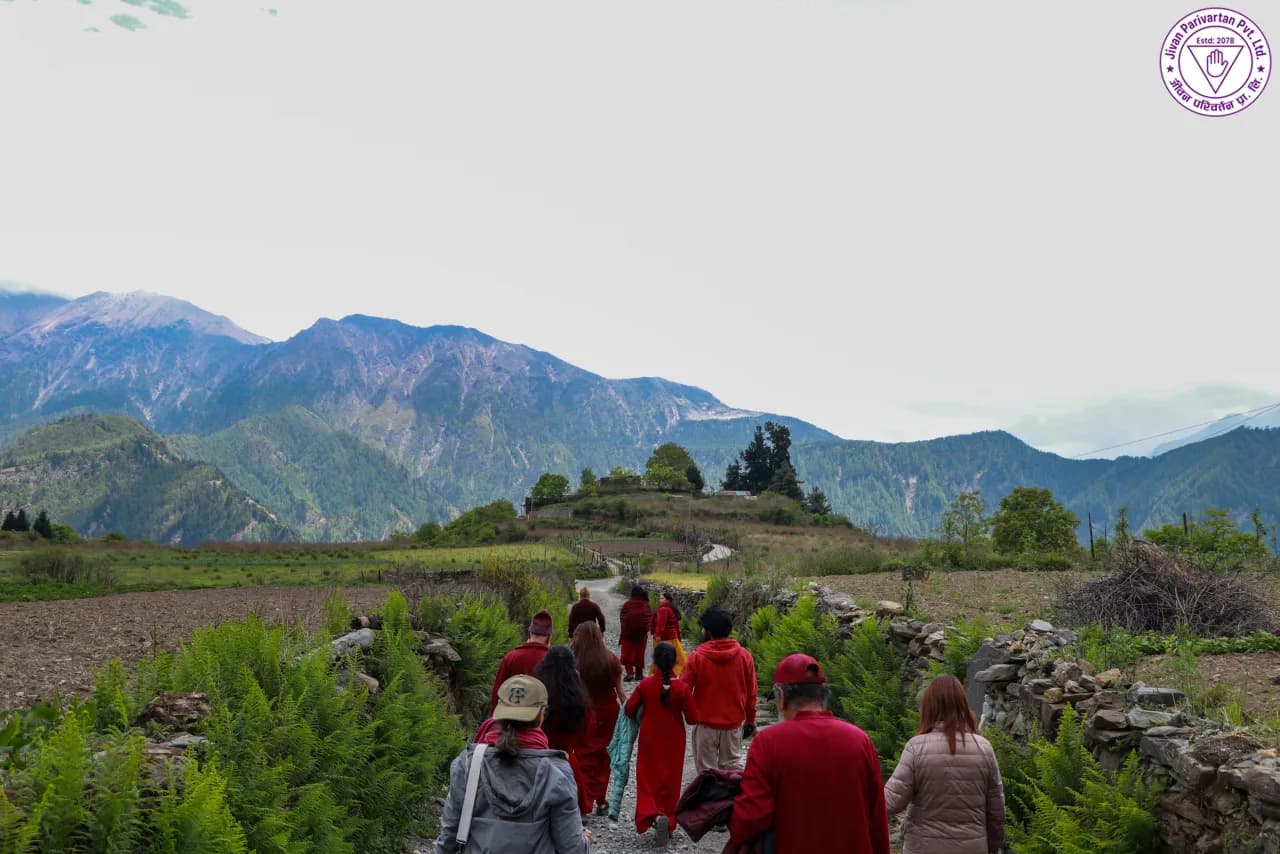
We see the same pattern every season. Someone has saved for months, taken their annual leave and flown 14 to 24 hours to reach Kathmandu. Within 36 hours of landing they are on a domestic flight to Lukla or a bus to Besisahar, still on home time, still in a body that has not moved properly in days. The first three days on the trail then get spent half-acclimatising, half-fighting jet lag, and the trekker loses the early experience of a journey they have invested in.
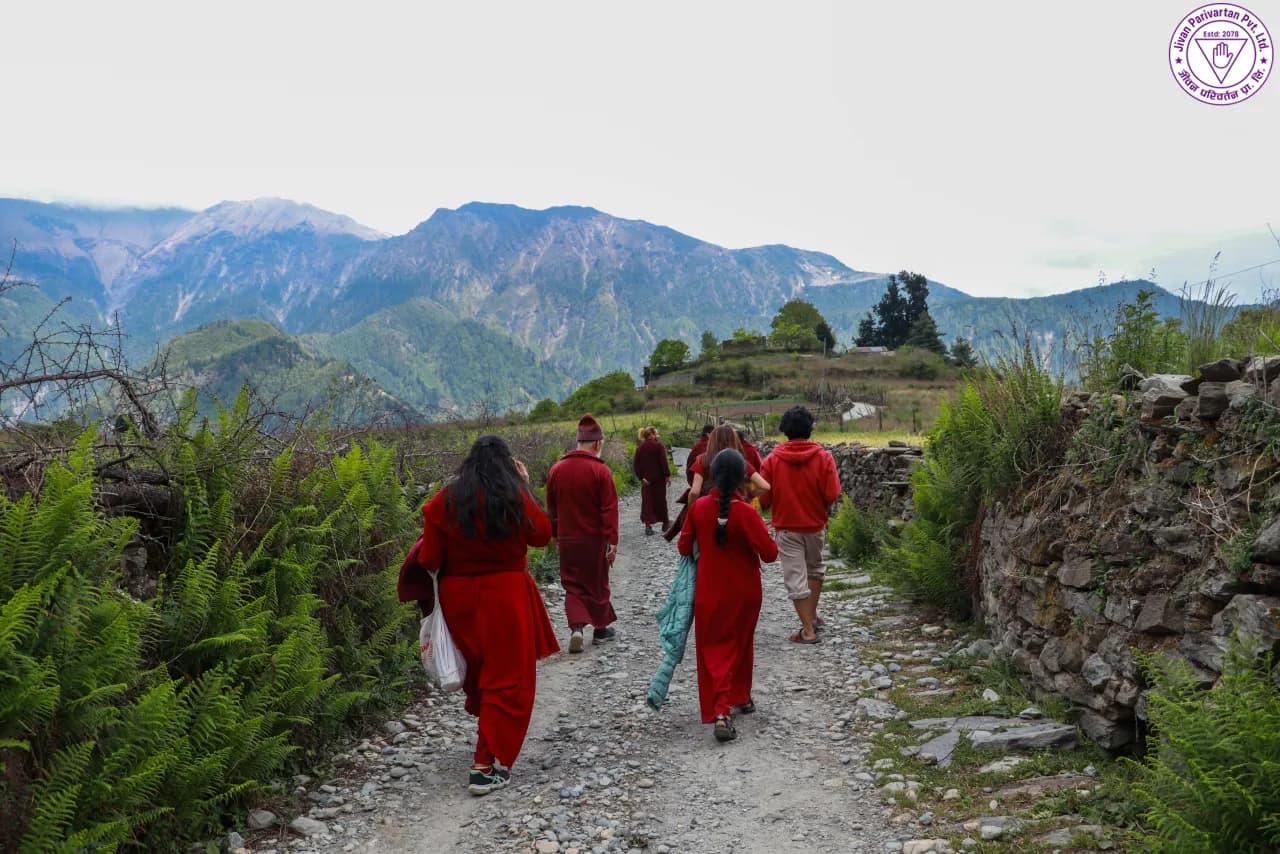
The other end is the same in reverse. After two to three weeks of walking 6 to 8 hours a day at altitude, on a diet that has narrowed to dhal-bhat and instant noodles, most trekkers come home with very tight calves and hip flexors, mild insomnia, a slightly raw nervous system and an experience that they have not had time to actually metabolise. The post-trek programme is built to release the load, reset sleep, and create the quiet space in which the journey lands.
This is one of four retreats in our portfolio. The others are the 5-day Mustang luxury retreat, the corporate wellness retreat for teams and the weekend yoga retreat in the Kathmandu Valley. The full retreat portfolio sits on our retreats hub.
What is in the 3-day pre-trek programme?
The pre-trek programme is built around four pillars: altitude breathwork, strength yoga aimed at trekking muscles, mental preparation and sleep optimisation in the new time zone. Pricing for the 3-day programme depends on your accommodation tier; contact us for current rates.
Altitude acclimatisation breathwork
Daily pranayama with Swami Anish using Bhastrika and Kapalbhati to expand diaphragmatic capacity and prime the respiratory tract for thin air. Twice-daily sessions, designed specifically for trekkers heading above 3,000 metres.
Strength yoga for trekking muscles
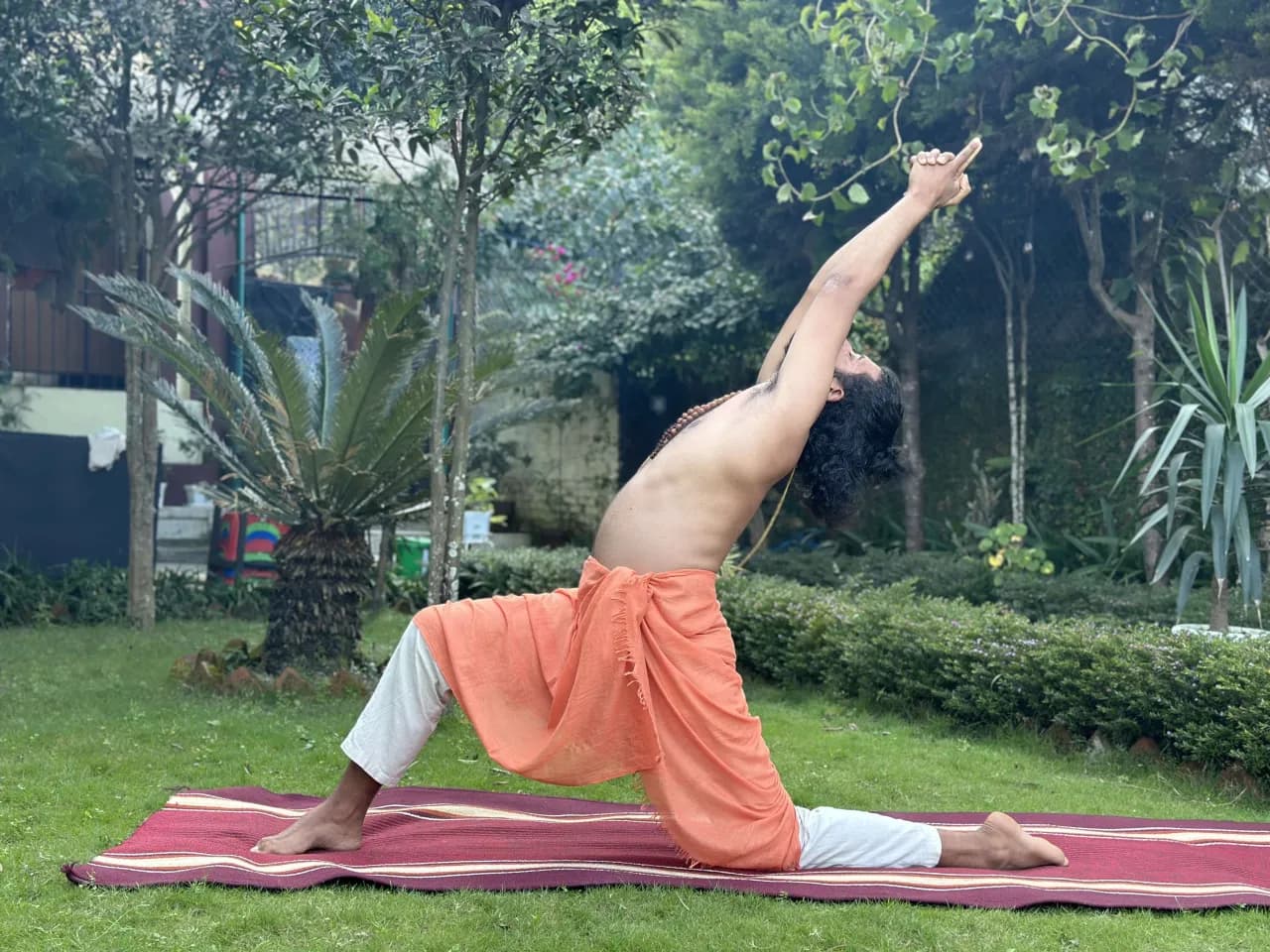
Targeted asana work with Yogi Awdaitmani on the calves, hip flexors, glutes, lower back and ankles, the structures that take the load on Himalayan trails. Anatomically grounded, not generic flow yoga.
Mental preparation
Two short sessions with Maa Nisha Kabir on managing the mental load of long days, sleep disruption and the inevitable hard moments above 4,000 metres. Practical techniques, not platitudes.
Sleep optimisation in the new time zone
A structured 72-hour protocol to drop into Nepal time using meditation, evening pranayama, light exposure and an evening Yoga Nidra session. Most clients sleep through the night by Day 2.
Trek-day nutrition orientation
A short workshop on what to eat and drink during the trek to support energy and acclimatisation, including how to handle the dhal-bhat-heavy tea house diet that you will see for the next two weeks.
Take-home trail kit
A printed pocket card with the breathing routines, two short meditation practices and the self-massage techniques to use on the trail. The kit is designed to fit in a chest pocket and survive being read in the cold.
A note on altitude breathwork
The pranayama we teach is not a substitute for proper acclimatisation. You still need to gain altitude gradually on the trail. What the breathwork does is widen the diaphragm and the intercostal muscles, train you to breathe more deeply by default, and tone the vagus nerve so the body settles into sleep more easily at 3,500 to 5,500 metres.
Bhastrika builds capacity; Kapalbhati clears the respiratory tract; Nadi Shodhana regulates the autonomic system. Used together for three days before a trek, they shift how the first hard days of altitude feel. Used together at altitude on the trail, they can ease early acute mountain sickness symptoms while you descend or rest.
What is in the 3-day post-trek programme?
The post-trek programme is the mirror image of the pre-trek work. Deep-tissue release, restorative yoga, sound healing, integration time and simple food, in the same 3-day format. Pricing depends on accommodation; contact us for current rates. Many trekkers find post-trek even more valuable than the pre-trek phase.
Deep-tissue release
Daily bodywork focused on calves, IT bands, hip flexors and lower back, the structures most loaded by descents. Combines therapeutic massage with restorative yoga shapes for sustained release.
Restorative and Yin yoga
Slow Yin and restorative yoga sessions with Yogi Awdaitmani to open hips and shoulders that have spent weeks under a pack. Sessions are 90 minutes; nothing demanding, lots of supported holds.
Nervous-system reset
Sound healing with Tibetan singing bowls led by Swami Anish, plus daily Yoga Nidra. Most post-trek clients arrive in a sympathetic-dominant state from weeks of walking. The work is to bring them out.
Integration time and journaling
A structured reflection block with Maa Nisha Kabir using guided journaling and quiet sitting time. The aim is to capture what the trek actually changed for you, before it dissolves into ordinary life on the flight home.
Simple sattvic food
Vegetarian sattvic meals after weeks of tea house dhal-bhat and instant noodles. Lighter, fresher and easier to digest, designed to support the recovery phase.
Optional Reiki and chakra work
Optional one-to-one Reiki sessions with Maa Nisha for clients who want deeper energetic recovery, particularly after high-altitude or emotionally intense expeditions like Everest Base Camp.
What does a typical day look like?
The shape of the day is similar in both programmes but the content is different. Pre-trek leans into strength, breath training and capacity-building; post-trek leans into release, restoration and integration. Mornings hold the practice blocks; afternoons hold the bodywork or workshop time.
06:30
Optional silent walk or rest
Quiet morning walk or extra sleep depending on how your body is responding.
07:00
Pranayama session
Pre-trek: Bhastrika and Kapalbhati. Post-trek: long-exhale Nadi Shodhana for recovery.
08:30
Yoga practice
Pre-trek: strength yoga targeting trekking muscles. Post-trek: restorative and Yin yoga.
10:00
Breakfast
Vegetarian sattvic breakfast with extra hot fluids and herbal tea.
11:00
Workshop or bodywork
Pre-trek: altitude or nutrition workshop. Post-trek: deep-tissue release session.
13:00
Lunch and rest
Simple vegetarian lunch followed by a long rest or optional reading time.
16:00
Afternoon practice
Pre-trek: mental preparation with Maa Nisha. Post-trek: sound healing with Swami Anish.
18:30
Dinner and reflection
Dinner followed by a short journaling or sharing circle on goals (pre-trek) or integration (post-trek).
20:30
Wind-down practice
Yoga Nidra or short pranayama to support deep sleep before the next day.
Which treks does this programme pair with?
Most of our trekking-retreat clients are heading for one of six classic Nepal routes. The decision on whether to do both programmes or only one usually comes down to the altitude and the length of the trek. We will discuss this on the intake call and recommend whichever combination genuinely fits.
Everest Base Camp (EBC)
Both programmes recommended. The pre-trek altitude work is especially valuable for EBC; the post-trek recovery is essential after 12 days at altitude with a 5,545 m maximum at Kala Patthar.
Annapurna Base Camp (ABC)
Pre-trek programme is highly recommended; post-trek is optional but valued. ABC is moderate altitude (4,130 m) but high mileage, so calf and knee recovery is the priority on return.
Annapurna Circuit
Both programmes strongly recommended. The Circuit crosses Thorong La at 5,416 m, which is where the altitude pranayama work pays off, and the descent into Mustang is hard on knees and hips.
Mardi Himal
Pre-trek programme is enough for most trekkers. Mardi tops at 4,500 m and is short, so post-trek can be a single recovery day or a full 3-day programme depending on how much rest you want.
Langtang Valley
A pre-trek programme is enough for most trekkers. Langtang sits at moderate altitude (3,870 m max) and is close to Kathmandu, making it easy to combine with our centre work either side.
Manaslu and Three Passes
Both programmes strongly recommended, and we will add an extra day of recovery on request. These are the routes where post-trek bodywork makes the biggest difference.
How much does the programme cost, and when can I do it?
Pricing depends on accommodation choice, programme length and group size. The 6-day combined option carries an automatic 20% discount versus booking the two programmes separately, because the planning and venue work overlaps.
3-Day Pre-Trek
Contact us for current pricing
Altitude breathwork, strength yoga, sleep optimisation and trail kit. 3 days, full board, twin or single accommodation.
3-Day Post-Trek
Contact us for current pricing
Deep-tissue release, restorative yoga, sound healing and integration time. 3 days, full board, twin or single accommodation.
6-Day Combined (20% off)
Contact us for current pricing
20% combined-package discount
Both programmes booked together, scheduled around your trek dates. The smoothest arc from arrival to departure.
Seasonal windows
Autumn 2026
September to November 2026
Peak trekking season; clear skies and stable weather. Highest demand; book 4 to 8 weeks ahead.
Spring 2027
March to May 2027
Second peak: warmer days, rhododendron in bloom on Annapurna routes. Good for ABC and EBC.
Winter 2026
December 2026 to February 2027
For lower-altitude treks (Ghorepani, Langtang, Mardi Himal). Quieter trails, colder nights.
Who teaches the trekking retreat?
The trekking retreat is co-led by Yogi Awdaitmani, Maa Nisha Kabir and Swami Anish. Each leads the part that suits their training. Yogi Awdaitmani teaches the physical work because of his biomedical engineering background; Maa Nisha and Swami Anish lead the breathwork, meditation and integration.
Yogi Awdaitmani
Strength yoga, recovery yoga, bodywork
A B.E. Biomedical Engineering graduate from Anna University in Chennai, Yogi Awdaitmani brings an anatomical lens to trekking-specific yoga. He designed the strength programme for the calves, hip flexors, ankles and lower back, and the Yin and restorative sequences used in post-trek recovery.
Swami Anish
Altitude pranayama, sound healing
Swami Anish leads the altitude pranayama, the sleep-focused breathwork and the Tibetan singing bowl sound healing sessions. His background as a clinical hypnotherapist also shapes the gentler nervous-system work in the post-trek programme.
Maa Nisha Kabir
Mental preparation, integration
Maa Nisha Kabir leads the mental preparation work for pre-trek and the integration sessions for post-trek. Her two years of silent cave retreat and 12 years of continuous sadhana inform a grounded approach to long days, hard weather and the inner work that a Himalayan trek almost always brings up.
Full bios are on the teachers and healers page. Trekkers who want to take the practice deeper after the retreat sometimes return for our 200-hour yoga teacher training in Kathmandu.
What do trekkers say about the programme?
The reviews below are from clients whose journeys involved high-altitude and transformational arcs. The themes that recur are the same as on the trail: the quality of the rest, the steadiness of the practice and the difference it made to how the body and mind felt on the way home.
I came to Jivan Parivartan with deep emotional wounds. Through Maa Nisha’s sound healing and spiritual counselling, I found healing I did not think was possible. Eternally grateful.
What about altitude, kit and logistics?
Our centre sits at around 1,400 metres in Kathmandu, the natural acclimatisation step between sea level and a Himalayan trek. The practicalities below cover what you actually need to bring and what we will handle on the ground.
Altitude and acclimatisation
Kathmandu is 1,400 m, which is itself a useful acclimatisation step before flying to Lukla or busing to Besisahar. The pre-trek pranayama work is designed to expand capacity for the higher altitudes you will hit on day 3 to day 7 of the trek itself, not to replace gradual elevation gain.
What to bring
Comfortable yoga clothes, layered clothing for 10 to 25 degrees Celsius, a refillable water bottle and any personal trekking medication. We provide yoga mats, props, bolsters and meditation cushions. The post-trek programme can also store any heavy gear you do not need on the trail.
Coordinating with your trekking operator
We do not run the trek itself, but we coordinate dates and pickup with your trekking operator at no extra cost. Most of our 6-day combined clients arrive, do 3 days with us, are picked up by their trekking operator from our centre, and return the same way.
Travel insurance
Comprehensive travel insurance is required for the trek itself, including high-altitude trekking cover at the maximum altitude on your route, and helicopter evacuation. The retreat itself does not require additional insurance beyond standard travel cover.
Pre and Post Trekking Yoga Retreat: Frequently Asked Questions
Make the Trek Count
Flexible 3-day pre-trek and post-trek programmes, with a 20% discount when you book the combined 6-day package. WhatsApp Maa Nisha and Swami Anish with your trek dates to start planning.