Co-Founder & Meditation Guide
Reviewed and updated June 2026
Meditation is the central practice of the Himalayan tradition, and Kathmandu, surrounded by the great stupas of Boudhanath and Swayambhunath and the temples of Pashupatinath, is one of the most natural places in the world to learn it. Jivan Parivartan offers daily morning meditation in person and online, guided single sessions, an immersive One-Day Transformation Program, and multi-day meditation retreats. Whether you have never sat for ten minutes before, or you sit every day and want to deepen your practice, we have a doorway in.
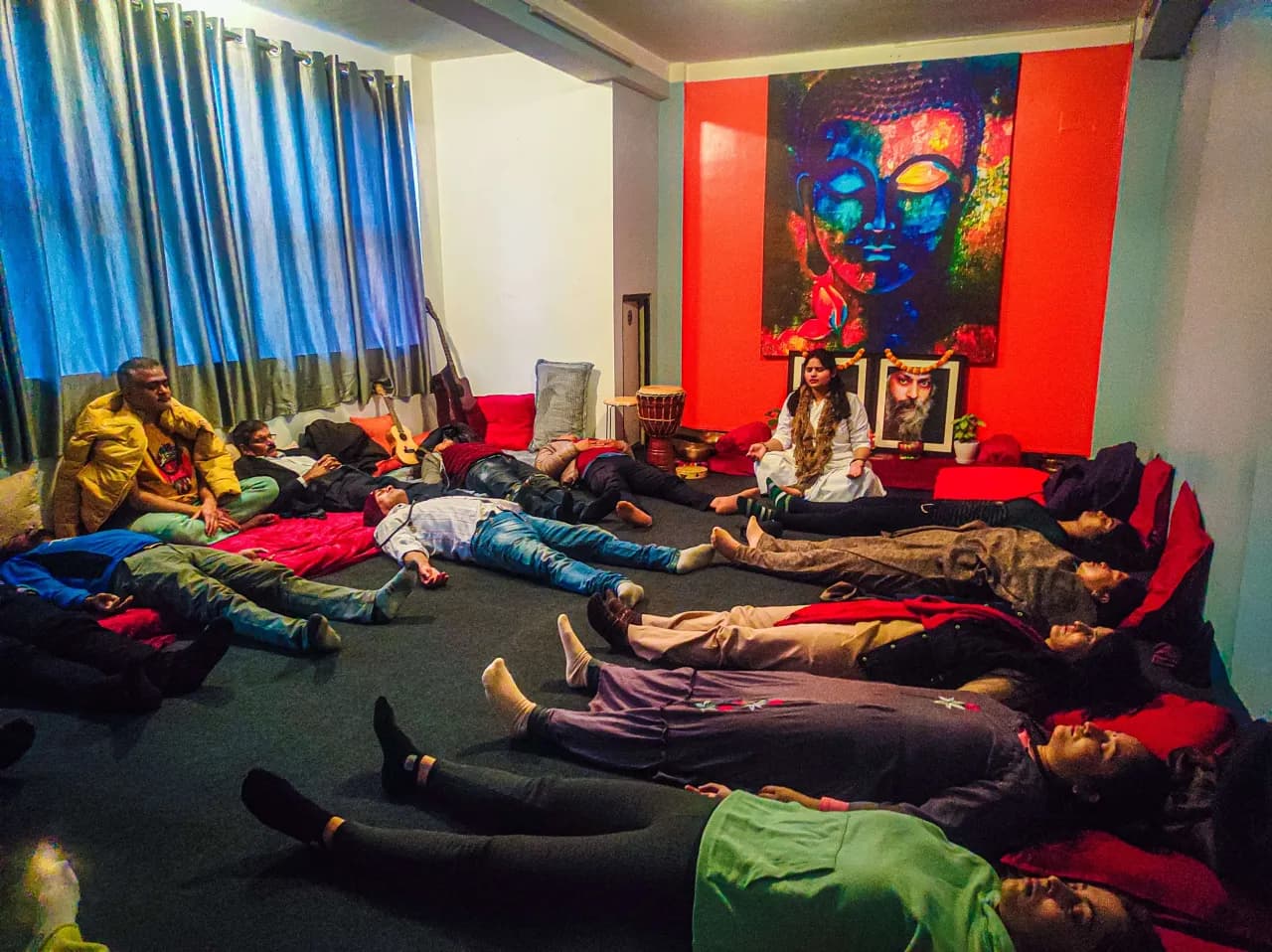
The most reliable way into meditation is consistency, not intensity. That is why our daily morning meditation, 6:00 to 8:00 AM Nepal time, is open to everyone: in-person at our Tarkeshwor centre or live online for international students. You can join per session, or by the week or month, whichever fits your rhythm. The same two-hour flow of breathwork, sound, and silent sitting runs every day, so you can drop in whenever you can and pick up where you left off. Many of our students join the online session before work and find that this small daily anchor changes more than any sporadic intensive could.
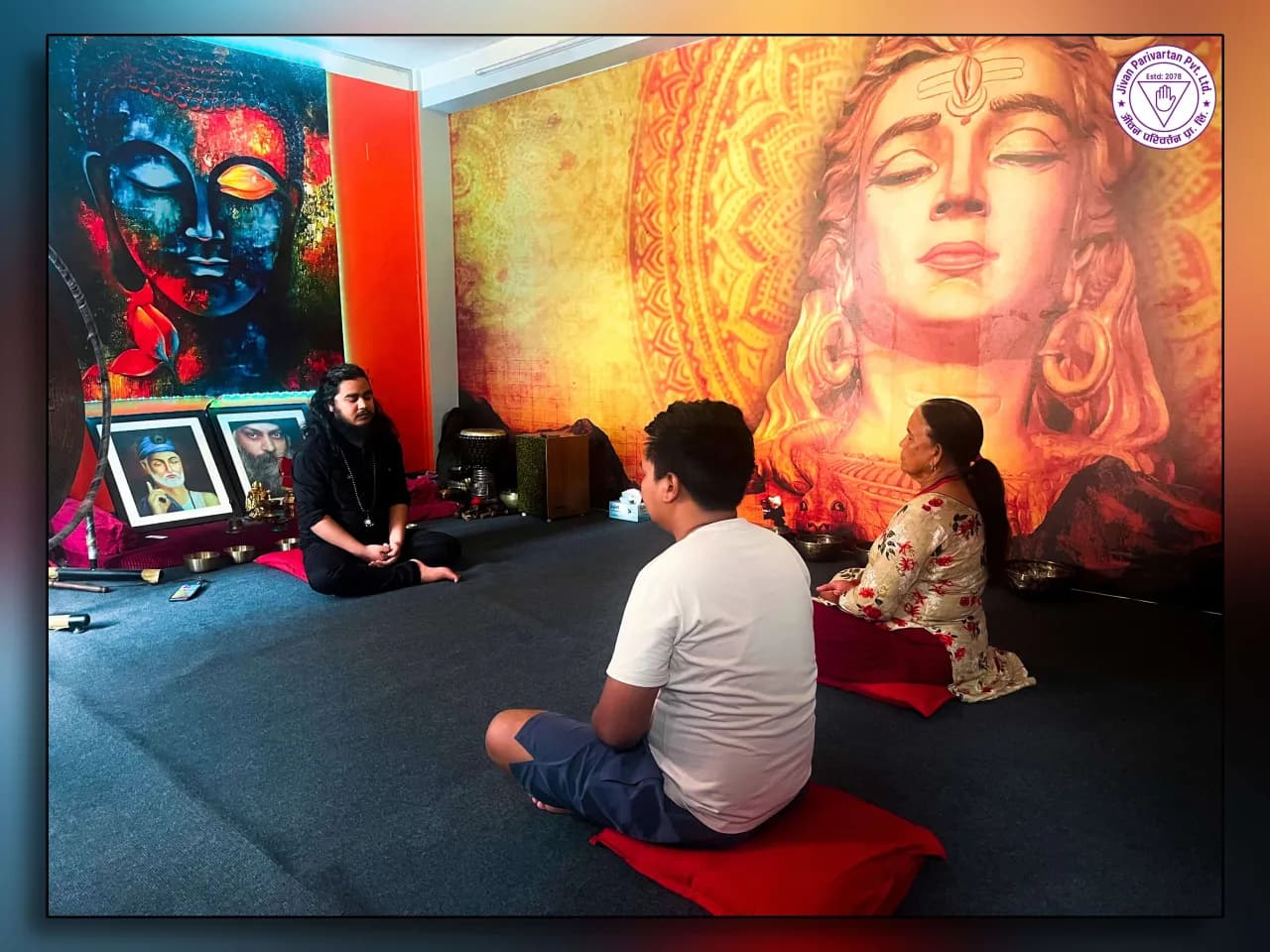
Meditation at Jivan Parivartan is taught as the Himalayan tradition has always taught it: as a set of specific techniques you actually practise, not as a vague suggestion to "be present". You will learn pranayama (breath techniques) to settle the nervous system first; mantra work for sustained attention; and mudra meditation, which uses hand positions to anchor the mind. Each technique is taught with clear instruction and a reason: this one for restlessness, this one for grief, this one for the sleep-resistant mind at 3 AM. You will leave knowing what to use, when.
Maa Nisha Kabir, our founder, brings the depth of two years of solitary cave retreat in the Nepalese Himalayas and twelve years of continuous sadhana. Her instruction style is precise and quiet; she will spot the small misalignments (the way you are holding your shoulders, the way you are forcing your breath) that keep meditation difficult. Co-founder Swami Anish brings a different gift: he is a Reiki Master and a certified clinical hypnotherapist, and his approach to meditation is informed by both contemplative and clinical training. For students working with strong emotional or trauma material, his sessions are often the more appropriate first door.
The One-Day Transformation Program is our most-requested offering. Over a single immersive day, you move through morning meditation, a deep breathwork session (the part of the day where most people release the most), sound healing, lunch, and an afternoon of reflective work that draws on clinical hypnotherapy alongside contemplative practice. The day is dual-led by Maa Nisha and Swami Anish, which is rare; most centres rotate facilitators. It includes lunch and a personalised follow-up practice plan that we send by email a week after, so the day does not stop on Sunday evening. The program is $150 per person.
Multi-day meditation retreats run several times a year, ranging from three-day weekend silent retreats in the green Kathmandu Valley foothills to longer Himalayan retreats. Days follow a steady contemplative rhythm: morning meditation and pranayama, light yoga or walking practice, silent breakfast, longer formal meditation sessions, lunch, rest, afternoon practice, evening sit, simple early dinner. Silence is held throughout, with structured one-to-ones with the teacher for guidance. These are the retreats where students who have been sitting on and off for years tell us they finally landed.
Meditation pairs powerfully with the other modalities at the centre. Reiki and sound healing both help the body settle into a state from which meditation becomes possible (rather than fighting a tense body and a busy mind for ten minutes). Our 200-hour yoga teacher training program is explicitly meditation-led, not asana-led, in line with the Himalayan tradition. And if you are joining us for a Mustang luxury retreat or a corporate wellness day, meditation will be the practice you return to most often.
Booking is simple. Drop into morning meditation any day, no booking required: WhatsApp us for the online Zoom link or just come to the centre at 6 AM. For the One-Day Transformation Program, book at least a week ahead so we can include you in the small group (typically six to eight people per program). Multi-day retreats need around two weeks of lead time. If you are unsure where to begin, message us with a sentence about what is bringing you and we will recommend the right entry point.
Ways to Practise
Guided meditation, daily morning meditation (in person and online), one-day transformation intensives and meditation retreats in Kathmandu, Nepal.
Morning Meditation in Kathmandu (In Person & Online)
Start the day with guided breathwork and meditation, 6–8 AM Nepal time, in Kathmandu or online, paid per session, weekly or monthly.
Learn moreOne Day Transformation Program
A single immersive day of meditation, breathwork, healing and reflection led by Maa Nisha Kabir and Swami Anish.
Learn moreMeditation Retreat in Nepal
Multi-day silent and guided meditation retreats in the Kathmandu Valley and Himalayas.
Learn moreExplore More of Our Centre
Frequently Asked Questions
Ready to begin? Talk to us about meditation.
Tell us what you’re looking for and we’ll help you plan the right session, course or retreat in Kathmandu.