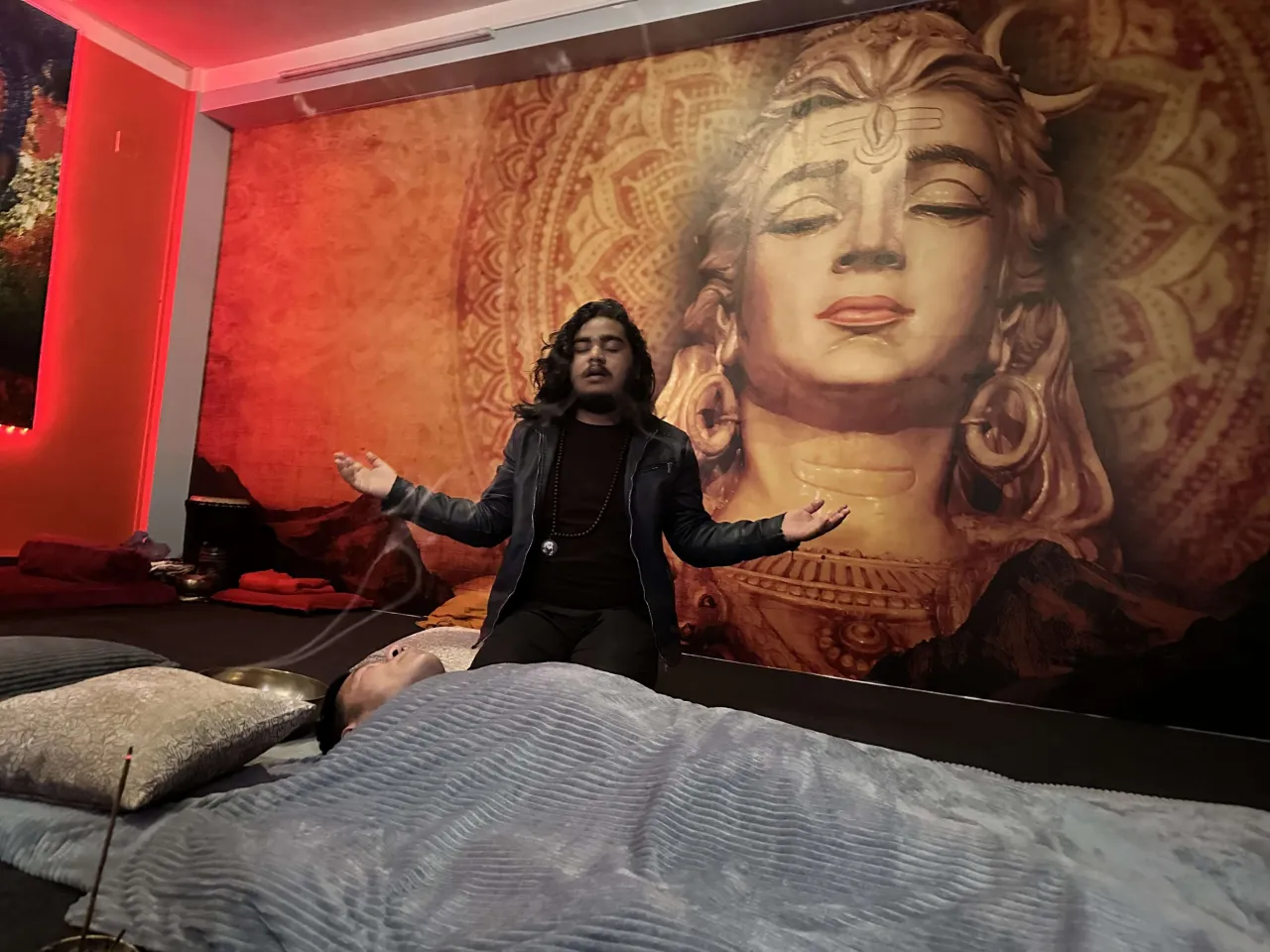
60 Minutes. One to One. Usui Lineage.
Reiki Healing Session in Kathmandu, Nepal
A one-to-one Reiki session with Maa Nisha Kabir, Reiki Master and founder of Jivan Parivartan. Sixty minutes on a treatment table, fully clothed, in a quiet room in Tarkeshwor on the north-western edge of the Kathmandu Valley. $50 per session.
What is a Reiki healing session, and what does it actually do?
A Reiki healing session is a sixty-minute, one-to-one energy treatment in which a Reiki Master rests light hand positions on or just above a clothed body to settle the nervous system, ease blocked energy and support the body in its own healing work. At Jivan Parivartan the session follows the traditional Usui lineage taught by Mikao Usui in early twentieth century Japan, and costs $50 for the hour.
Reiki is best understood as a quiet, complementary practice. It is not massage, it is not therapy and it is not a religion. The word translates loosely as universal life force. The practitioner is not the source of the healing; the practitioner is a clean channel, and the body does the work it has always known how to do once the system can stop bracing. That is why so many clients describe the session as the first proper rest they have had in months.
We see four main reasons people walk in for a first Reiki session: chronic stress that will not lift with sleep or exercise, anxiety that has narrowed daily life, poor sleep after a difficult life event, and post-illness or post-surgery recovery where the body is well but the system feels battered. We also see grief, jet lag, and the quieter category of people who simply want an hour of inner stillness in a busy travel itinerary.
If you are new to energy work and want to read the context first, the Reiki hub at Jivan Parivartan covers the full range of sessions and trainings we offer. If you are ready to learn the practice yourself rather than receive it, the next step is Reiki training and certification in Kathmandu.
A Single Session, Step by Step
What happens during a Reiki session with us?
A Reiki session at Jivan Parivartan follows a stable five-part rhythm: intake, settling, energy treatment, integration and a short closing conversation. Nothing surprising happens, nothing dramatic is asked of you, and you stay clothed throughout. The work itself is quiet.
Intake (5 minutes)
A short conversation about what brought you in, anything medical we should know, and what you would like the session to support. We do not need a life story, a sentence is enough. We will also explain hand positions so nothing is surprising once you are on the table.
Settling (5 minutes)
You lie on a treatment table with a blanket and a bolster under the knees. We guide a couple of minutes of slow nasal breathing to drop the system into a parasympathetic state. Most people notice their shoulders fall an inch by the third breath.
Reiki treatment (40 to 45 minutes)
Maa Nisha works through a sequence of light hand positions starting at the head, moving through the throat, heart and solar plexus, down to the lower belly and feet. Touch is feather-light or held just above the body. Many clients fall into a half-sleep state; some stay aware throughout. Both are normal.
Integration (5 minutes)
You rest in silence for a few minutes after the hands lift, allowing the work to settle. We will lightly ring a bowl to signal the close. Coming back too fast is the most common mistake; we will not rush this step.
Closing conversation (5 minutes)
A short, honest conversation about what we noticed, what you noticed, and what is sensible for the next twenty-four hours. If we think you would benefit from a short series of sessions, we will say so; if a single session is enough, we will say that too. We then walk you out with a glass of warm water.
Who is a Reiki session for, and who is it not for?
A Reiki session is for anyone who wants a quiet, drug-free hour of nervous-system regulation and energy support. It is particularly helpful for chronic stress, anxiety, sleep difficulty, grief and post-illness recovery. It is not a substitute for medical care and we will say so plainly at the door.
✓Book a session if
- •You have been carrying chronic, low-grade stress for months and sleep has slipped
- •You are recovering from illness, surgery or a hospital stay and feel battered
- •You are working with grief, a breakup, a bereavement or a hard life transition
- •You have generalised anxiety that has narrowed your daily life
- •You are an experienced practitioner who simply wants an hour to receive, not to give
- •You are visiting Kathmandu and want a single grounded reset before flying home
×It is not the right fit if
- •You expect Reiki to replace medical, psychological or psychiatric treatment
- •You are in an acute mental-health crisis and need clinical care first
- •You are looking for a structural body treatment like deep-tissue massage
- •You want a dramatic, talk-heavy or cathartic session; Reiki is quiet
- •You are unable to lie still and rest for the better part of an hour
How is Reiki different from massage or acupuncture, and what lineage do we teach in?
Reiki is an energy treatment, not a body treatment. There is no manipulation of soft tissue, no needles and no pressure work. The touch is feather-light or held a few centimetres above the body. This is the most common point of confusion for first-time clients, who book expecting bodywork and find something quieter and more inward. Both Reiki and bodywork are useful; they are simply doing different jobs in different layers.
Massage
Works directly on muscle and connective tissue through firm pressure and stretching. Effective for structural pain, tight tissue and post-exercise recovery. The practitioner does most of the work; the client is mostly passive but is being acted on physically.
Acupuncture
Works on specific points along the energy meridians using fine needles. A formal medical tradition in its own right, with strong evidence in pain management and certain functional conditions. Effective but invasive in a small, precise way.
Reiki
Works on the energetic and nervous-system layer through light or no-touch hand positions. Quiet, non-invasive, deeply restful. Particularly effective for chronic stress, anxiety and the energetic side of post-illness recovery. Pairs well with both massage and acupuncture when needed.
The lineage we teach in
We work in the traditional Usui Reiki lineage, the system founded by Mikao Usui in Japan in 1922. The lineage descends through Chujiro Hayashi and Hawayo Takata and has been carried into the Himalayan tradition through teachers in Nepal and India. The system uses a structured three-level path (Shoden, Okuden, Shinpiden), specific hand positions, and the classical Reiki symbols introduced at the second level. Nothing in a session at Jivan Parivartan is improvised or modernised away from the original system.
Why does the lineage matter? Because it determines the quality of the transmission. A Reiki Master can only pass on what they themselves have received cleanly. Maa Nisha Kabir trained as a Reiki Master in this lineage and has practised continuously for more than twelve years, including a two-year silent retreat in the caves of the Nepalese Himalayas. That is the depth of practice standing behind every session. If you would rather learn the practice yourself than receive it, the same lineage is taught on our Reiki training and certification course.
When is one session enough, and when should you come for a short series?
A single session is enough for general wellbeing, jet lag, a pre-event reset or a short-term stressful patch. A short series of three to five sessions over four to six weeks is the right format for anything chronic: long-standing stress, recurring anxiety, ongoing grief, post-illness recovery or burnout.
A single session is right when
- • You want to try Reiki and see how your system responds
- • You are visiting Nepal and have one open slot
- • You have a specific event coming up and need a reset
- • Sleep has been off for a week, not for a year
- • You are well and simply want an hour of stillness
A short series is right when
- • Stress or anxiety has been with you for months
- • You are recovering from illness, surgery or a hospital stay
- • You are processing grief or a difficult ending
- • Burnout has settled in and one good evening is not enough
- • You want a real, lasting shift, not a single nice afternoon
If chronic stress is the core issue, the dedicated Reiki for stress management page covers the three-session and five-session protocols we use, and how Swami Anish blends Reiki with clinical hypnotherapy where the pattern is deeply entrenched.
Pricing and Booking
One session, one clear rate
We do not run discounts or upsells on Reiki. A session is $50, with payment accepted in NPR, EUR, USD or by bank transfer.
Reiki Healing Session
60 minutes, one to one
$50
In person at our Tarkeshwor-5 centre, Kathmandu
- Five-minute intake conversation
- Forty-five minutes of treatment table Reiki
- Integration and closing chat
- Aftercare guidance for the next twenty-four hours
- Honest read on whether a follow-up is useful
International clients who cannot travel can book the same session as a live distance Reiki session from Nepal for the same rate.
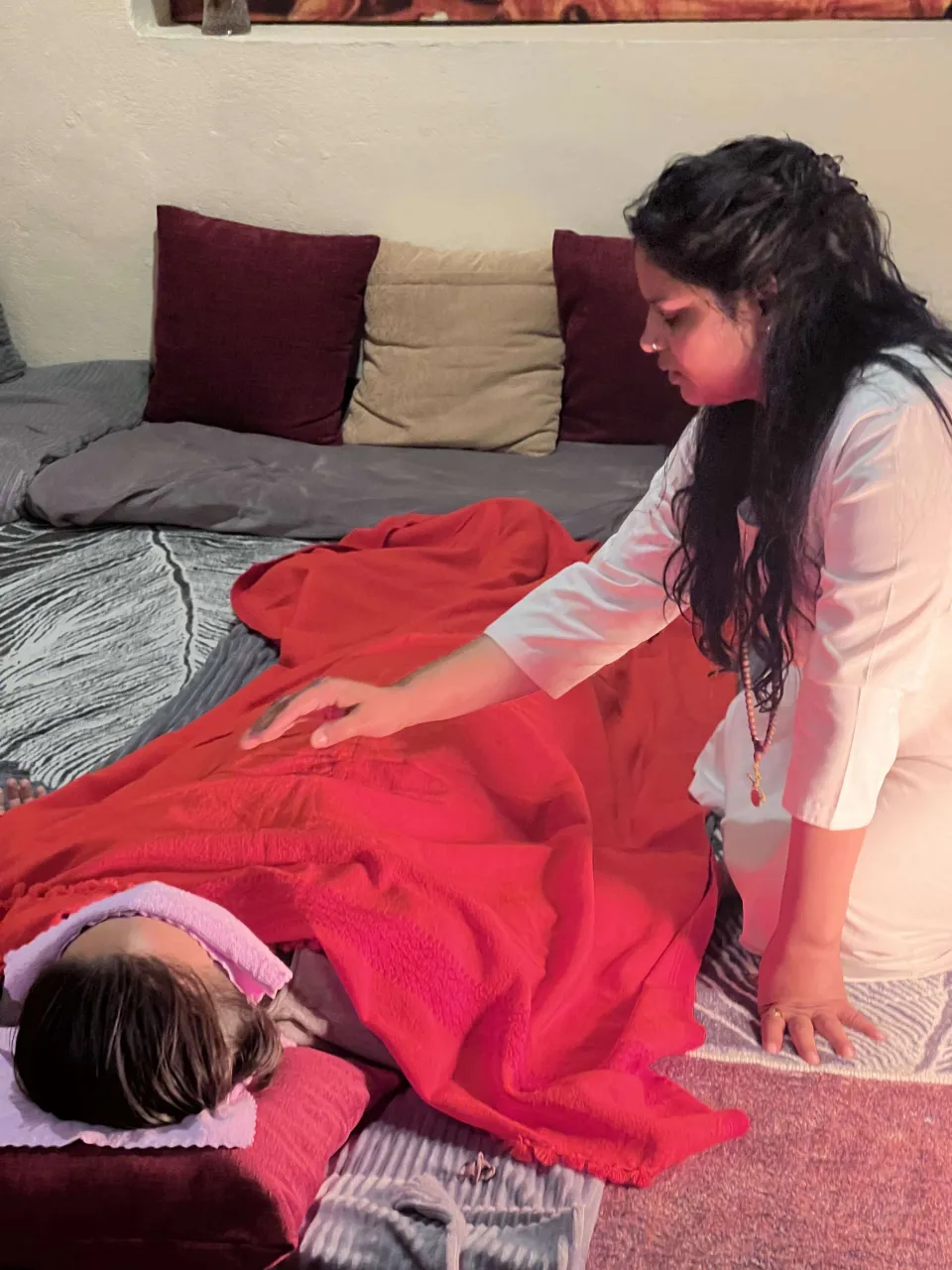
Your Practitioner
Maa Nisha Kabir
Reiki Master & Spiritual Healer
Maa Nisha Kabir founded Jivan Parivartan after a two-year silent retreat in the caves of the Nepalese Himalayas. Her path began at the age of fourteen and has been shaped by more than a decade of continuous sadhana, study with teachers in Nepal and India, and over six years of full-time professional healing work. As a Reiki Master and spiritual guide she has supported more than eight thousand individuals through one-to-one Reiki, sound healing, meditation and counselling, with a particular focus on chronic stress, anxiety and emotional trauma.
Maa Nisha has worked with more than eight thousand individuals through Reiki, sound healing and meditation. Her path began at fourteen and has been shaped by a two-year silent retreat in the caves of the Nepalese Himalayas. The practice she offers is unhurried, precise and faithful to the Usui lineage as it has been carried in the Himalayan tradition.
Credentials and lineage
- ✓Reiki Master (Usui lineage)
- ✓Tibetan and Vedic singing bowl practitioner
- ✓Two years of cave meditation in the Nepalese Himalayas
- ✓6+ years of full-time professional healing practice
- ✓Trained in meditation and pranayama in the Himalayan ashram tradition
Co-founder Swami Anish (Reiki Master and clinical hypnotherapist) takes sessions where Reiki is combined with hypnotherapy or focused chronic-pain work. He also leads the centre's meditation programmes and sound healing sessions.
Client Voices
What people say after a session
“Maa Nisha’s Reiki healing transformed my chronic anxiety into peace. Her gentle energy and profound wisdom helped me reconnect with myself after years of feeling lost.”
“I came to Jivan Parivartan with deep emotional wounds. Through Maa Nisha’s sound healing and spiritual counselling, I found healing I did not think was possible. Eternally grateful.”
“Swami Anish’s Reiki healing gave me relief from chronic back pain that doctors could not fix. His calm presence and healing energy are truly transformative.”
Reiki sessions in Kathmandu: questions clients ask
Related to a Reiki session
If a single session is not enough, read the Reiki for stress and anxiety page for the three and five-session protocols, or the distance Reiki session format for international clients. To learn the practice yourself, see Reiki training and certification in Kathmandu. To pair Reiki with daily practice, see meditation in Kathmandu and sound healing in Kathmandu.
Book your Reiki session in Kathmandu
One session, one hour, one fixed rate. Send a short message on WhatsApp or email with two or three preferred dates and we will reply within hours.