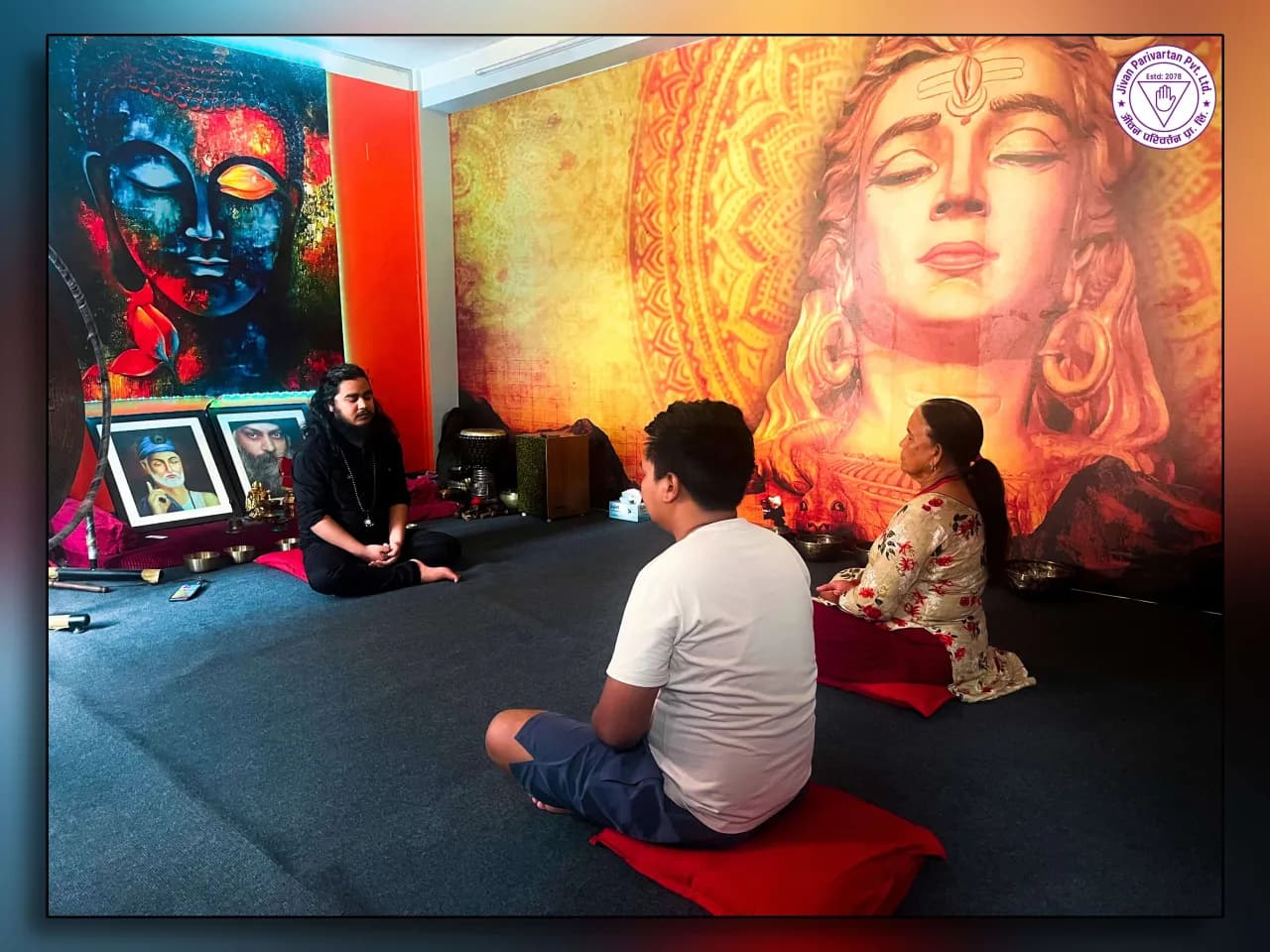
Daily Practice, 6 to 8 AM Nepal Time
Morning Meditation in Kathmandu (In Person and Online)
A two-hour guided meditation, every morning of the year, from 6:00 to 8:00 Nepal time. In person at our Tarkeshwor centre, and live online by Zoom for students anywhere in the world. Pay per session, weekly or monthly, no booking required, suitable for complete beginners and long-term sitters alike.
What is the daily morning meditation in Kathmandu?
The daily morning meditation is a two-hour guided session at Jivan Parivartan, held every day from 6:00 to 8:00 AM Nepal time. It combines pranayama, guided meditation, silent sitting and a short mantra closing, and runs simultaneously in person at the Tarkeshwor centre and live online by Zoom for international students.
In the Himalayan ashram tradition, morning is taught as the most teachable hour of the day. The mind has not yet constructed its agenda, the body is rested, and the atmosphere itself is unusually quiet. Sitting in this window does not require more willpower than other hours; it requires less. A daily anchor practice at this time tends to do far more structural work than a longer session sat once or twice a week, because the consistency does the work that intensity cannot.
The two-hour shape is deliberate. The first half settles the nervous system through breath. The middle takes the attention to a meditation focus that rotates by day of week. The third half-hour is silent. The closing brings the body back into the room with a short mantra or singing bowl tone. New students often arrive expecting meditation to mean only the silent middle; the surrounding structure is what makes the silence possible.
The session is led primarily by founder Maa Nisha Kabir, with Swami Anish and Anupam Chidananda rotating in. It is not a class in the gym sense. There is no progress tracking, no homework, no app. You either arrive or you do not, and over time the practice quietly reshapes the rest of the day. To learn more about the wider meditation work at the centre, see our meditation in Kathmandu hub.
Why is morning taught as the most teachable hour?
In the Himalayan tradition the brahmamuhurta, roughly the hour and a half before sunrise, is considered the most receptive window for inner work. The reasoning is not mystical so much as observational. Before the mind has constructed its day there are fewer competing storylines for attention to track. Cortisol is in its natural morning curve, which the body can use for clarity rather than reactivity if it is given a focused channel. The atmosphere of a city like Kathmandu is, simply, quieter at six in the morning than at any other hour.
The practical effect is that a beginner can sit longer in the morning than they could at any other time of day, without strain. Long-term sitters often report that the same technique that takes them twenty minutes to settle into at 8 PM lands in three or four minutes at 6 AM. This is not because the technique is different. It is because the system has not yet committed to the day.
Consistency is the second half of the principle. Meditators who sit for forty minutes once a week and meditators who sit for twenty minutes every morning are doing very different things. The second group is asking the nervous system to rewire a pattern. The first group is asking it to remember an exception. Most of the long-term changes students report (sleep, response to conflict, the quality of the first hour of the day) come from the second pattern, not the first. The session exists to make that second pattern easy to keep.
What does the 2-hour session contain, segment by segment?
The shape of the session is fixed so that beginners and long-term sitters know exactly what to expect, while the content of the guided meditation rotates by day so that the practice does not get mechanical. The order below holds every morning. Every segment is optional, but the order matters.
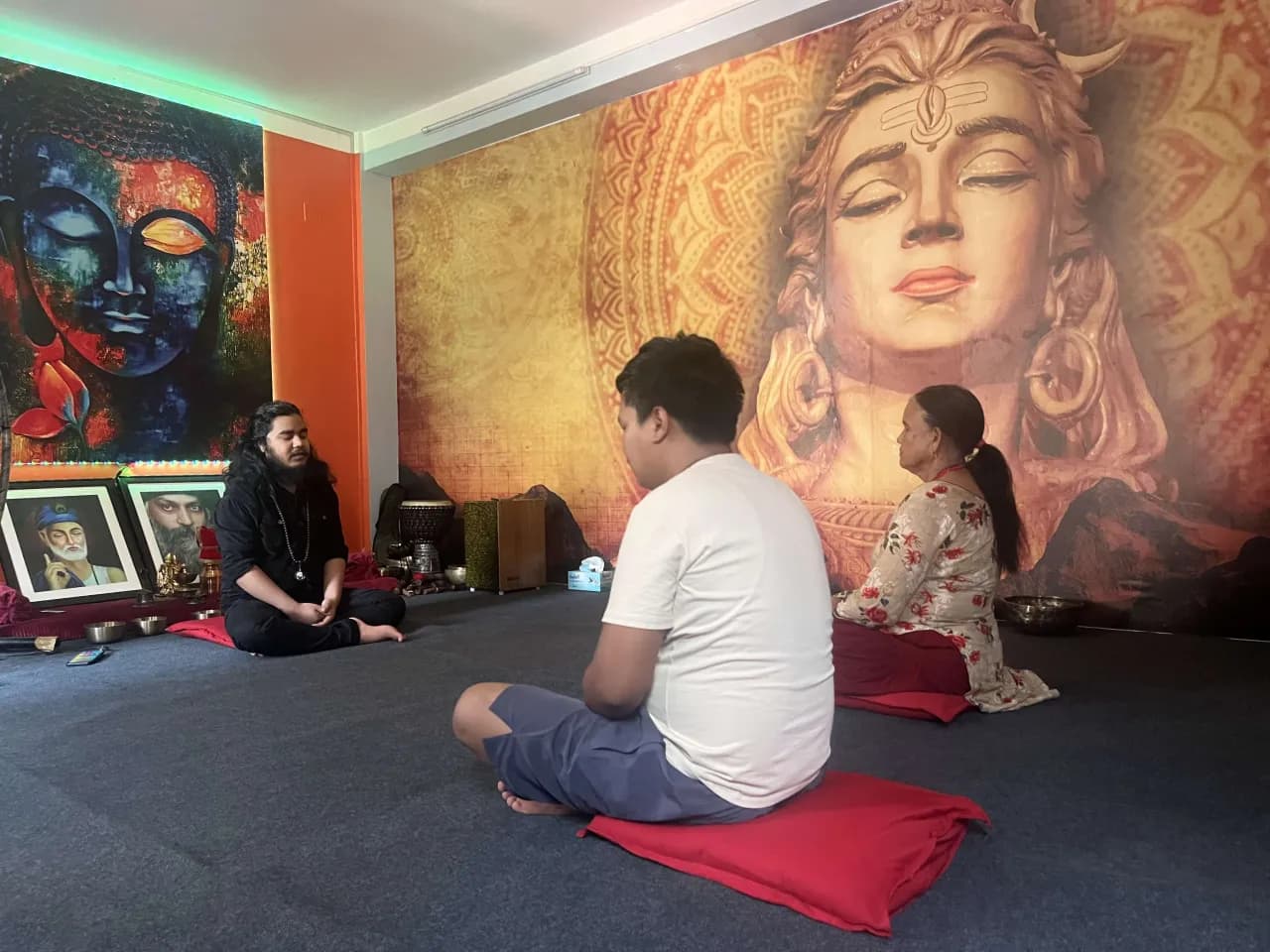
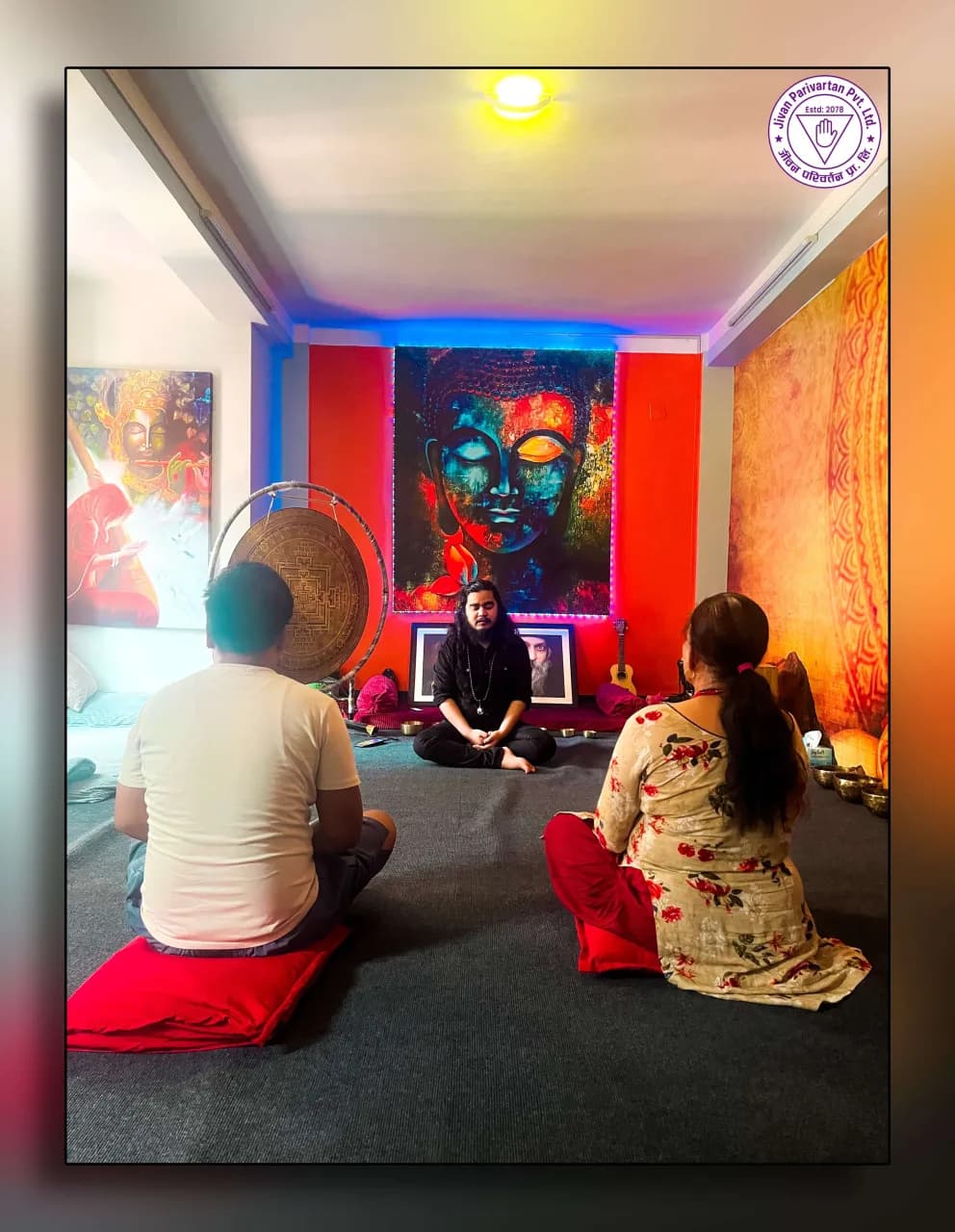
- 06:00 to 06:15
Arrival, grounding and posture
Quiet log-in or arrival. A short body scan, posture adjustment and three rounds of long, slow nasal breathing to mark the line between sleep and practice. Cameras stay on briefly for greetings, then most online students go camera-off to settle.
- 06:15 to 06:45
Pranayama (structured breathwork)
Thirty minutes of pranayama in a rotating sequence: Nadi Shodhana (alternate nostril breathing), Ujjayi, Bhramari humming breath, and on some days Kapalabhati. The instruction is technical and specific. Ratios are spoken aloud so even beginners can follow.
- 06:45 to 07:15
Guided meditation
Thirty minutes of teacher-led meditation. The technique rotates by day of week: Monday breath awareness, Tuesday chakra awareness, Wednesday mantra meditation, Thursday body scan, Friday loving-kindness, Saturday Yoga Nidra-style relaxation, Sunday silent sitting with minimal cues.
- 07:15 to 07:45
Silent sitting
Thirty minutes of unguided silent sitting. No music, no spoken cues, just the held container of the room. This is the segment that does most of the structural work over time. New students can leave at this point without disturbing anyone.
- 07:45 to 08:00
Mantra and sound closing
A gentle close with mantra (often the Mahamrityunjaya or a simple Om sequence) and Tibetan singing bowl tones from the room. Maa Nisha shares one short reflection, takes one or two questions, and the session ends.
What is taught: the pranayama and meditation techniques in detail
The teaching is specific. Pranayama techniques rotate through Nadi Shodhana (alternate nostril breathing in a 4:4:8 or 4:8:8 ratio depending on the day), Ujjayi (the throat-constricted ocean breath used to lengthen exhalation), Bhramari (the humming breath used to settle the vagus nerve), Sheetali (a cooling breath used in warmer months) and Kapalabhati (a forceful exhalation technique reserved for days when the room is awake enough to do it without strain). Ratios are spoken aloud so beginners can follow without prior knowledge.
The guided meditation segment rotates by day. Monday is breath awareness in the Vipassana sense, watching the breath at the nostril without modification. Tuesday is chakra awareness, moving attention through the seven energy centres with simple breath and visualisation. Wednesday is mantra meditation using one of three short Sanskrit syllable mantras (often So-Ham, Om, or the Mahamrityunjaya), repeated mentally with the breath. Thursday is body scan. Friday is metta or loving-kindness meditation. Saturday is a Yoga Nidra-style guided relaxation lying down. Sunday is silent sitting with minimal cues, for students who want to sit a longer unguided practice.
The closing combines a short mantra (usually Om or the Mahamrityunjaya Mantra) with Tibetan singing bowl tones from the room. The bowls are not played for ambience; they are used to bring the body back into the room without jolting the system. If the vocabulary above is new to you, see the philosophy and pranayama curriculum in our 200-hour teacher training for the same techniques taught in much more depth.
How does the online session work for international students?
A daily Zoom link is sent on WhatsApp the evening before, or you can request the recurring link once and use it every morning. The first time you join, message us on WhatsApp at +977 9768590123 with your name and time zone. We add you to a small list and you receive the link automatically from then on. There is no booking platform, no account to make and no password to remember.
On Zoom, the teacher remains on camera throughout the session. Most students switch their own camera off after the opening hello and sit comfortably at home. Microphones are muted by default for the meditation and silent sitting segments and opened for the brief check-in at the start and end. Audio is the load-bearing channel, not video, so a slow internet connection is fine. The session is held live every day, including Saturdays and major holidays, so you can keep a daily practice through travel and time zone changes.
The session runs 06:00 to 08:00 Nepal Standard Time, which is UTC+05:45. For roughly fifteen common time zones the conversion is below.
- India (IST): 06:15 to 08:15
- UK (GMT): 00:15 to 02:15
- Central Europe (CET): 01:15 to 03:15
- US Eastern (EST): 19:15 to 21:15 prev day
- US Pacific (PST): 16:15 to 18:15 prev day
- Singapore / Hong Kong: 08:15 to 10:15
- Sydney (AEST): 10:15 to 12:15
- Dubai (GST): 04:15 to 06:15
Many international students join for only part of the session, typically the pranayama and guided meditation, because the silent sitting segment falls in an awkward hour locally. This is normal and welcome; leave the call quietly whenever you need to.
Who actually shows up to the morning session?
The room is a steady mix of Nepali sitters from across the Kathmandu Valley, international students by Zoom across roughly twenty countries, and a small core of long-term regulars who have sat almost daily for years. The patterns below appear most often in our intake conversations.
Complete beginners
People who have never sat in meditation and want a structured place to begin. The clear, technical cues in pranayama and the rotating meditation focus make the first few weeks navigable.
Long-term sitters
Established meditators who want refined cues in the Himalayan ashram lineage, accurate ratio breathing instruction and the steadying influence of a daily group container.
International students by Zoom
Students in Europe, North America and Australia who join from home. Many use the early-morning Nepal time as a focused window before their own day begins, even when the time zone is unfavourable.
Yoga teachers and YTT graduates
Teachers who want to keep a personal practice alive outside their own classes. Several of our YTT graduates come back to sit daily for months after the training ends.
People recovering from burnout
Professionals who need a structured early-morning anchor before the rest of the day pulls them into reactivity. Daily sitting paired with one-to-one Reiki work is a common pairing.
Travellers passing through Nepal
Visitors in Kathmandu for a week or a month who want a steady practice while in the valley. The in-person room at Tarkeshwor is open every morning for the duration of any trip.
How does payment for the morning session work?
The daily anchor practice exists because we believe the consistency of a daily sit is the single most useful structural intervention most people can make. To keep that easy to commit to, we let you pay in the way that matches how often you sit: per session if you drop in occasionally, or by the week or month if you want a daily rhythm. Payment is arranged by bank transfer or via WhatsApp, and you are welcome to try a session before deciding. Message us for current rates.
What you receive remains the same on any plan: two hours of guided practice every day, with a Reiki Master at the front of the room and the option of a fifteen-minute monthly one-to-one for regulars. What we ask in return, beyond the fee, is that you keep showing up. The most useful thing you can do for the teaching is the practice itself.
- Two hours of guided practice every single day of the year
- Pranayama, guided meditation, silent sitting and mantra in a fixed sequence
- In-person seating at the Tarkeshwor centre, with mats and bolsters provided
- Live Zoom link for international students, sent daily on WhatsApp
- Flexible payment per session, weekly or monthly, with no booking gate before joining
- Maa Nisha Kabir leading most sessions; Swami Anish and Anupam Chidananda rotating
- Optional one-to-one fifteen-minute check-in once per month for regulars
- Quiet community of sitters across roughly twenty countries
Who teaches the morning session?
The session is led primarily by Maa Nisha Kabir, with Swami Anish and Anupam Chidananda rotating in across the week. The continuity of voice matters: a consistent teacher cue helps the nervous system settle faster over the months. All three teachers are trained in the same Himalayan lineage, so the basic vocabulary stays the same across days.
Maa Nisha Kabir
Founder, Reiki Master, lead meditation teacher
Maa Nisha Kabir leads roughly five mornings per week. She trained in pranayama and meditation across ashrams in Nepal and India before two years of cave retreat in the Nepalese Himalayas, and has supported more than eight thousand individuals through one-to-one healing, meditation and counselling.
Swami Anish
Co-founder, meditation teacher
Swami Anish rotates in roughly twice a week, often leading the mantra meditation and Yoga Nidra-style sessions. As a meditation specialist, Reiki Master and certified clinical hypnotherapist, his cues tend to bring more verbal precision into the body-scan and loving-kindness mornings.
Anupam Chidananda
Spiritual practitioner, meditation guide
Anupam Chidananda guides the Sunday silent sittings and the occasional nature-based meditation morning. A long-form contemplative whose teachers have largely been the forests and rivers of Nepal, his cues are spare and direct.
Full bios for all three teachers and the wider faculty are on our teachers and healers page.
What do regular sitters say about Maa Nisha's teaching?
The voices below come from regular meditation students at the centre. We do not edit testimonials beyond light copy for clarity, and we only publish quotes from people who have consented to be named.
The two years she spent in Himalayan caves shine through her teaching. Her meditation guidance is unlike anything I have experienced. Authentic, powerful and deeply transformative.
Maa Nisha’s Reiki healing transformed my chronic anxiety into peace. Her gentle energy and profound wisdom helped me reconnect with myself after years of feeling lost.
I came to Jivan Parivartan with deep emotional wounds. Through Maa Nisha’s sound healing and spiritual counselling, I found healing I did not think was possible. Eternally grateful.
Morning Meditation: Frequently Asked Questions
Sit Tomorrow Morning, Online or In Person
06:00 to 08:00 Nepal time. Pay per session, weekly or monthly, no booking gate. Message us on WhatsApp for the daily Zoom link and current rates, or arrive at our Tarkeshwor centre five minutes early.