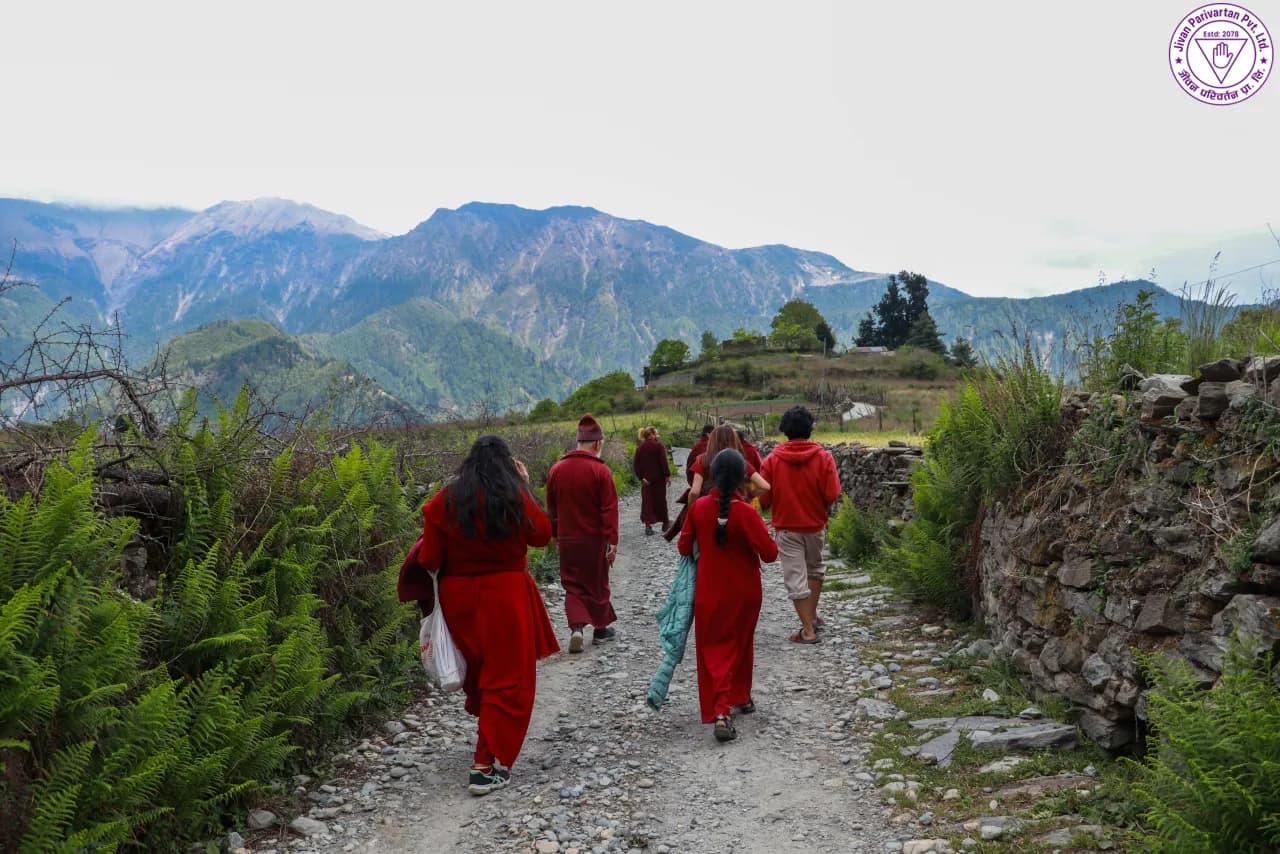
Himalayan Yoga in Nepal
Himalayan yoga is less a style than a lineage and a place. It is the meditative, breath-centred practice that grew in the caves and ashrams of the high mountains, where stillness comes more easily and the body and mind settle into the rhythm of the peaks.
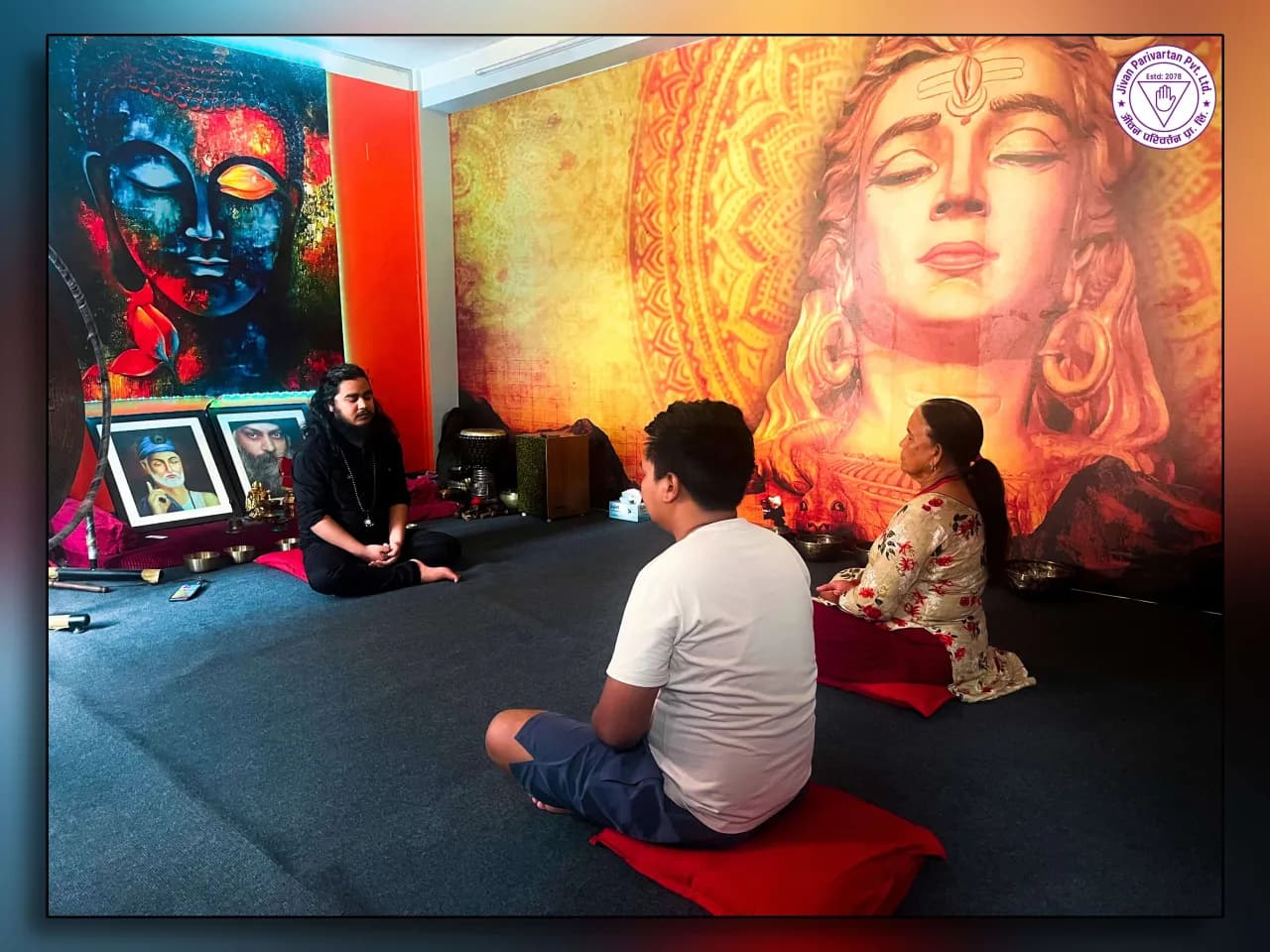
Co-Founder & Meditation Guide
Reviewed and updated June 2026
What is Himalayan yoga?
Himalayan yoga refers to the contemplative tradition carried by yogis and meditators in the Himalayan ranges of Nepal, Tibet and northern India. Rather than emphasising athletic posture, it centres on pranayama (breath), meditation, mantra and the deeper philosophy of yoga, with asana as preparation for stillness rather than the goal itself.
This is the tradition our founders practise. Maa Nisha Kabir spent two years in silent cave retreat in the Nepalese Himalayas before founding Jivan Parivartan, and the centre’s teaching reflects that mountain lineage: grounded, quiet and focused on inner transformation rather than display.
What sets Himalayan practice apart
Breath and meditation first
Pranayama and meditation are the core of the practice, with posture supporting the breath rather than dominating the session.
The power of altitude and silence
The thin, clear mountain air and profound quiet of the foothills naturally slow the mind. Many people meditate more deeply here than they ever have at home.
A living guru lineage
Teaching passes from teacher to student in the guru-shishya tradition, kept alive in Nepal’s ashrams and mountain hermitages.
Connection to the land
Practising within sight of the high peaks, often outdoors at dawn, reconnects the practice to nature in a way that is hard to find elsewhere.
Practising at altitude: what to know
Higher altitude changes how the body responds to breath and movement. At elevation there is less oxygen, so vigorous practice feels harder and acclimatisation matters. This is one reason Himalayan practice leans towards slow, conscious breathing and gentle, sustained postures rather than fast flows.
If you join a high-mountain retreat or combine yoga with trekking, give your body time to adjust, hydrate well, and let the practice be gentle for the first days at altitude. Our pre and post-trek yoga programs are designed precisely to support acclimatisation and recovery.
How to experience Himalayan yoga
You do not need to live in a cave to taste this tradition. Daily practice at our Kathmandu centre carries the same lineage, and our luxury Mustang retreat takes you into the mountains themselves, with morning practice in the open air and the peaks on the horizon.
Written by
Swami AnishCo-founder of Jivan Parivartan, meditation teacher, Reiki Master, sound healer and clinical hypnotherapist.
Go deeper
Yoga Retreats in Nepal
Mountain and valley retreats across Nepal.
Learn moreMustang Luxury Retreat
A curated 5-day Himalayan journey.
Learn moreYoga & Trekking Retreat
Pre and post-trek yoga for acclimatisation and recovery.
Learn moreMeditation in Kathmandu
The heart of the Himalayan tradition.
Learn moreYoga Culture in Nepal
The living roots of the tradition.
Learn moreOur Teachers & Healers
The lineage behind our teaching.
Learn moreFrequently Asked Questions
Experience the Himalayan tradition
From daily practice in Kathmandu to a retreat in the high mountains, we will help you find the right way in.