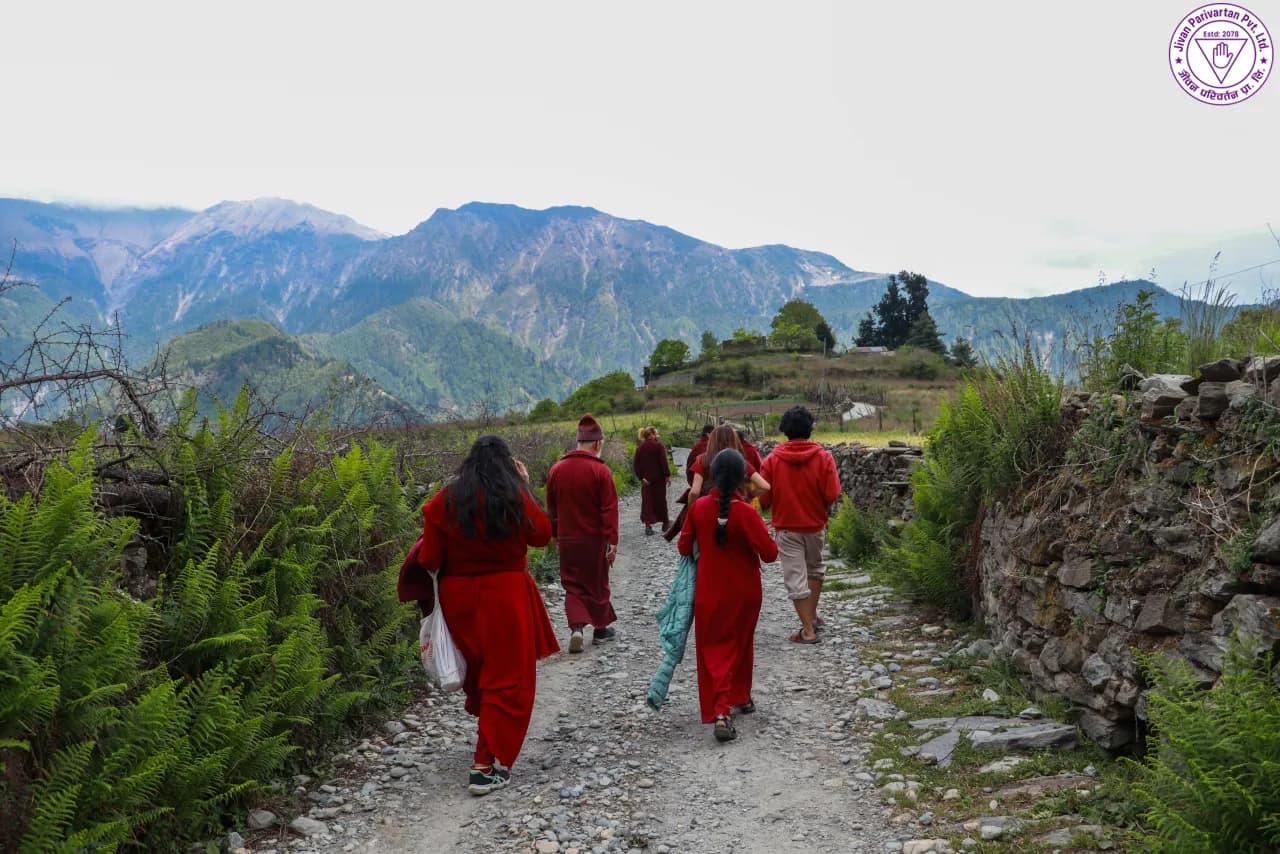
Silent and Guided Meditation Retreats
Meditation Retreat in Nepal: 3 to 10 Day Programs
Multi-day silent and guided meditation retreats led by Maa Nisha Kabir and Swami Anish, held in the Kathmandu Valley and the Himalayas. Pranayama, mantra, silent sitting and Tibetan singing bowl integration in the Himalayan ashram tradition. From short weekend valley retreats to multi-day Himalayan programs; contact us for current pricing.
What is a meditation retreat in Nepal?
A meditation retreat in Nepal at Jivan Parivartan is a residential, multi-day program in which meditation is the actual practice rather than a peripheral component. We offer three to ten day retreats, in silent and guided formats, held in the Kathmandu Valley foothills and in the Himalayas, led by founders Maa Nisha Kabir and Swami Anish in the Himalayan ashram tradition.
The teaching is rooted in the pranayama and mantra meditation outlined in the Yoga Sutras of Patanjali, integrated with Tibetan singing bowl work. The format is simple: long sitting blocks, light yoga in support of sitting, silent meals, a long midday rest and an early sleep. There is no entertainment programmed into the day. Group size is capped at twelve, and each retreatant has at least one fifteen-minute one-to-one meeting with a teacher across the arc.
If you are choosing between a yoga retreat, a wellness retreat and a meditation retreat, the distinction matters. People come to a meditation retreat for stillness, not for fitness or for a spa. For a wider view of our residential work, see our retreats hub in Kathmandu and the meditation in Kathmandu hub.
What formats do you run, and how do they differ?
We run four distinct retreat formats across the year. The choice between them is mostly a choice between depth and accessibility. The longer the silence and the higher the altitude, the further the work can go, and the more preparation it asks for. Most first-time retreatants begin with the guided weekend or three-day silent.
Silent retreat
3, 5 or 10 daysNoble silence is held between sessions, including meals. Speech is reserved for the daily teacher meeting and any safety needs. The silence is the technique. Suitable for experienced sitters or first-timers ready for a structured arc.
Best for: Established meditators or motivated beginners who want depth.
Guided retreat
3 or 5 daysSpoken teaching during sessions and quiet conversation permitted at meals and breaks. The same daily structure as a silent retreat, but with more verbal cueing and group discussion. Suitable for first-time retreatants.
Best for: First retreats, or returning students who want a slower onramp.
Weekend valley retreat
2 to 3 daysFriday evening through Sunday afternoon, held at a property in the Kathmandu Valley foothills, around 45 minutes from the city. A focused reset for working people who cannot take a week off.
Best for: Local Kathmandu sitters and travellers passing through for a short stay.
Himalayan meditation retreat
5 to 10 daysHeld in the Langtang region or Upper Mustang depending on the season. Higher altitude, longer sits, and a stronger sense of separation from daily life. Travel days are added to the schedule.
Best for: Experienced sitters ready for altitude and depth.
What does a sample retreat day look like, hour by hour?
The schedule below is the structural template used for our valley and Himalayan retreats. Times shift slightly with the seasons and the altitude. The order, the long blocks of silence and the early sleep stay constant. On silent retreats the entire day is held in noble silence except for the daily teacher meeting.
- 05:30 to 06:00
Wake, washing, herbal tea
A quiet wake-up bell, time to wash and dress in layers. A single cup of black or herbal tea is served. The hour is held in noble silence on silent retreats and in soft conversation on guided retreats.
- 06:00 to 07:30
Pranayama and morning sit
Ninety minutes of pranayama (Nadi Shodhana, Ujjayi and Bhramari in rotation) followed by a guided meditation, typically breath awareness or mantra meditation. This is the longest sitting block of the day.
- 07:30 to 08:30
Gentle yoga and movement
Sixty minutes of slow Hatha-style yoga in support of sitting, led by Yogi Awdaitmani or one of our senior teachers. Focus is on hip openness, spinal length and the structural alignment needed for long sits.
- 08:30 to 09:30
Silent breakfast
A simple vegetarian breakfast eaten in silence. The silence at meals is one of the most useful contemplative practices on retreat; many guests describe it as the part that lasts after they go home.
- 09:30 to 11:00
Mid-morning sit and teaching
A ninety-minute meditation segment, often broken into two shorter sits with a Yoga Sutras-based teaching in between, led by Maa Nisha Kabir or Swami Anish. The teaching is practical and short.
- 11:00 to 12:30
One-to-one teacher meetings
Each retreatant has at least one fifteen-minute meeting with a teacher across the retreat, often in this window. For technique and obstacle work, not therapy.
- 12:30 to 13:30
Lunch
A simple, locally sourced vegetarian lunch. Silent on silent retreats; quiet conversation permitted on guided retreats.
- 13:30 to 15:30
Rest and integration
Two hours of unstructured time. Many sleep in the early afternoon; some walk in nature; some journal. The body needs the rest.
- 15:30 to 17:00
Afternoon meditation
A second long sitting segment, often a chakra-based meditation or a body-scan. Pranayama is shorter; sitting is longer.
- 17:00 to 18:30
Evening sit and singing bowl integration
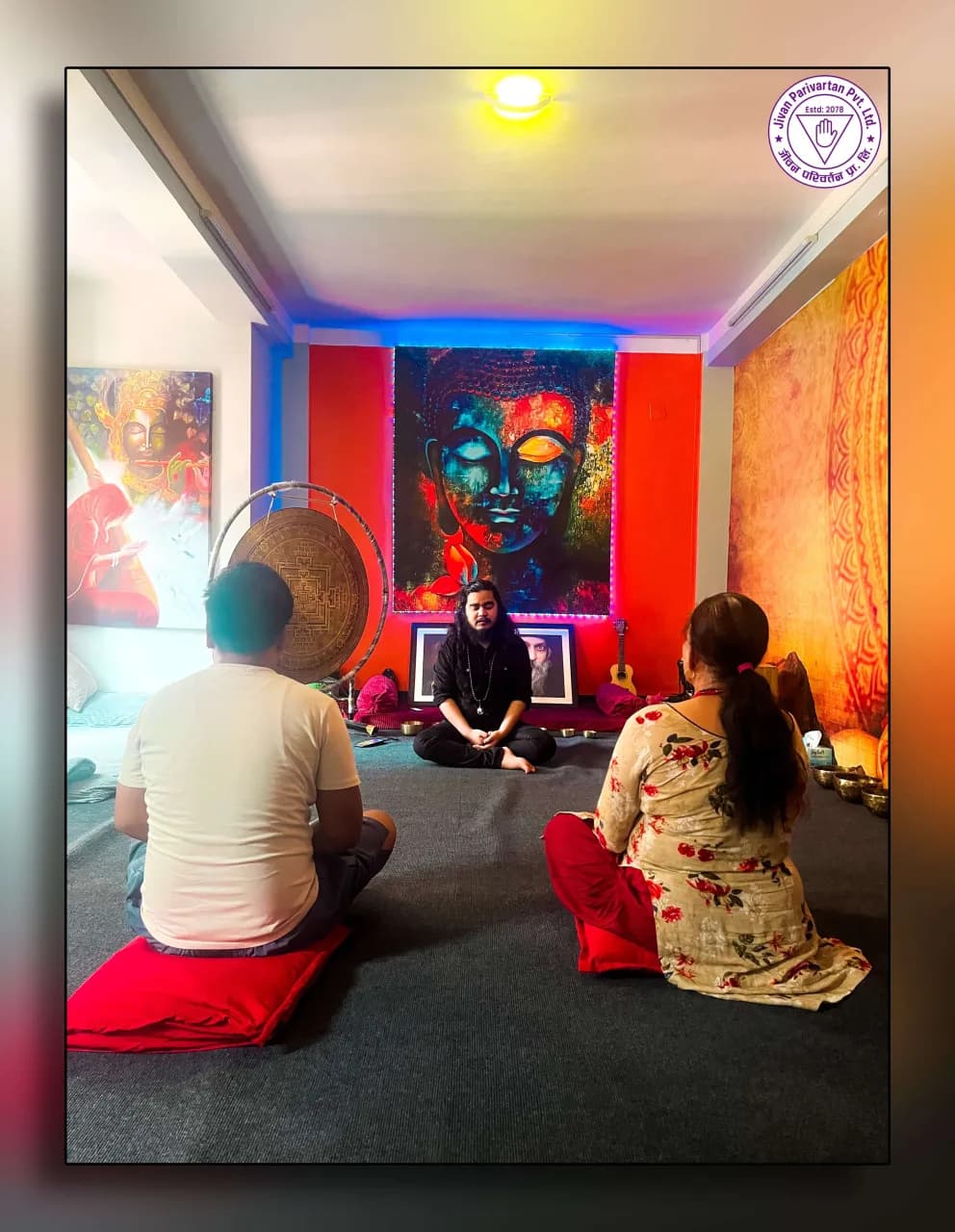
A guided silent sit followed by Tibetan singing bowl tones and gentle Reiki across the room. The bowls are used to settle the nervous system before dinner, not for ambience.
- 18:30 to 19:30
Simple dinner
A light vegetarian dinner. Eating lightly at night is part of the format. The simpler the food, the deeper the next morning sits.
- 19:30 to 20:30
Reflection or final sit
A short reflection from Maa Nisha or Swami Anish, optional questions, and a closing sit. Lights go out by 21:00. Early sleep is part of the practice.
What meditation and pranayama techniques are taught?
The teaching is rooted in the Yoga Sutras of Patanjali and the broader pranayama and mantra meditation lineage of the Himalayan ashram tradition. The techniques are specific. Pranayama segments rotate through Nadi Shodhana (alternate nostril breathing in a 4:4:8 ratio that lengthens over the retreat), Ujjayi (the throat-constricted ocean breath used to extend exhalation and steady attention), Bhramari (humming breath used to settle the vagus nerve before long sits) and Sheetali on warmer days.
The meditation segments rotate through breath awareness in the Vipassana sense, body scan, chakra awareness, mantra meditation using So-Ham, Om and the Mahamrityunjaya Mantra, and longer unguided silent sitting. The teaching between sits is short and practical: Yoga Sutras 1.2 (yogah cittavritti nirodhah) and the surrounding passages on the obstacles to sitting are referenced directly. Theory is kept minimal.
Tibetan singing bowl integration appears at least once per day, played by Swami Anish or a senior teacher across the room. The bowls are used at the close of the evening sit, and once per retreat in a longer integration segment after the deepest sit. For this work outside the retreat format, see our sound healing and singing bowl hub.
Where are the retreats held?
We hold retreats in three settings, chosen for what each makes possible. The valley properties are used for weekend and three-day retreats; the higher Himalayan locations are reserved for the longer arcs.
Kathmandu Valley foothills
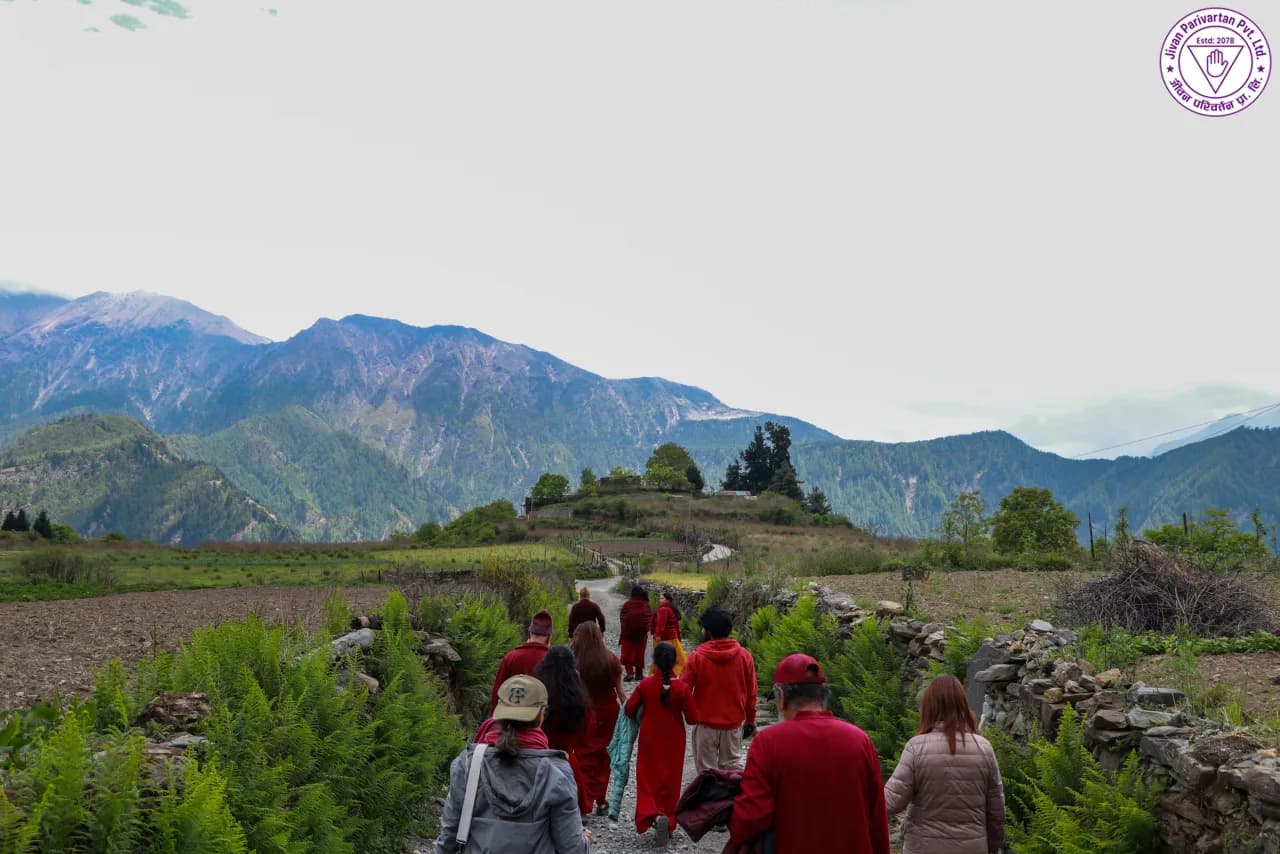
Three properties on the quiet north-western edge of the Kathmandu Valley, all around 45 minutes by road from the centre at Tarkeshwor. Used for weekend and three-day retreats. The Shivapuri-Nagarjun forest is on the doorstep.
Langtang region
A guesthouse partner at the edge of Langtang National Park, four hours by road from Kathmandu. Used for five-day retreats from spring through autumn. Sits are held outdoors in clear weather, indoors otherwise. Mountain views directly from the practice room.
Upper Mustang
For seven and ten day retreats we use the same premium lodges as our Mustang Luxury Retreat, Shinta Mani Mustang and the Royal Mustang Resort. The format is meditation-led rather than tourism-led.
How do I choose the right retreat length?
For most people, the length question matters more than the silent versus guided question. The honest answer is that a shorter retreat done well is more useful than a longer retreat the system was not ready for. Below is the guidance we give in pre- arrival conversations.
3-Day Retreat
Long enough to break the daily routine, short enough to be safe for any nervous system. The right starting place for a first retreat.
5-Day Retreat
The point at which deeper structural shifts begin to settle. Recommended for meditators with at least three months of regular sitting.
7 to 10 Day Retreat
The arc within which long-form practitioners report the most useful work. Best attempted after at least one shorter retreat. Held in Langtang or Mustang.
We are honest about fit. If a pre-arrival conversation suggests that a ten-day retreat is the wrong format for now, we will say so and suggest the three-day instead. The point is the practice, not the length of the brochure entry.
Who comes on these retreats?
The group is usually a mix of Nepali sitters, international students from across Europe and North America, and a few returning graduates from our teacher training. The patterns below appear most often in the pre-arrival conversations we have.
Experienced sitters who want depth
Daily meditators whose home practice has hit a plateau and who need a longer, structured arc. The five and seven day silent formats are designed for this.
Newer meditators ready for structure
People with three to six months of sitting who want to consolidate what they have learned. The three-day guided format is the gentlest start.
Returning teacher-training graduates
Graduates of our 200-hour YTT who come back to deepen personal practice without the teaching workload.
Professionals at decision points
Founders, parents and leaders standing in front of a meaningful decision who want structured silence to listen to the answer they already suspect is theirs.
People recovering from burnout
Those whose nervous systems have been in overdrive for months or years. A retreat is not a cure for burnout, but a five-day silent reset, paired with one-to-one Reiki sessions afterwards, often reopens what daily life had closed.
International travellers in Nepal
Visitors who built a retreat into a longer trip. Weekend and three-day formats sit alongside trekking; longer formats need a clean week with nothing on either side.
What do meditation retreats in Nepal cost?
Pricing is set so that the retreats remain accessible relative to the level of teaching in the room. Both founders are present for most of each retreat. Prices below cover teaching, lodging, all meals, ground transport from Kathmandu and the singing bowls used during sessions. Flights, where applicable, are additional.
Weekend valley retreat (2 to 3 days)
Inclusive of accommodation, meals and teaching at the Kathmandu Valley property. Contact us for current pricing.
3-day guided or silent retreat
The most common starting format for first-time retreatants. Contact us for current pricing.
5-day silent retreat
Held in the valley properties or the Langtang region depending on season. Contact us for current pricing.
7 to 10 day Himalayan retreat
Held in Langtang or, for the Upper Mustang programs, using premium lodges. Flights are additional. Contact us for current pricing.
We do not run early-bird discounts, but we reserve a small number of needs-based places on each retreat for serious sitters who would otherwise not be able to come.
Who teaches on retreat?
Both founders are present for most of each retreat, with Yogi Awdaitmani joining for the yoga segments and Anupam Chidananda guiding nature-based meditation on the Himalayan formats.
Maa Nisha Kabir
Founder, Reiki Master, lead meditation teacher
Maa Nisha Kabir leads the morning sits, the daily Yoga Sutras-based teaching and most one-to-one meetings. Her two years of cave retreat in the Nepalese Himalayas inform the long, quiet sits more than the spoken teaching does.
Swami Anish
Co-founder, meditation teacher, sound healer
Swami Anish leads the pranayama segments, the evening singing bowl integration and the reflection sessions. His clinical hypnotherapy training shapes the one-to-one meetings, where his cueing tends to be more analytical and verbally precise.
The senior team also includes Yogi Awdaitmani (B.E. Biomedical Engineering, yoga therapist) who leads the gentle yoga segments, and Anupam Chidananda, whose nature-based meditation guidance appears most often in the Langtang and Mustang formats. Full bios are on our teachers and healers page.
What do past retreatants say?
The voices below are retreatants who came back to write to us after returning home. We do not edit testimonials beyond light copy for clarity. We publish only quotes from people who have consented to be named.
Meditation Retreats in Nepal: Frequently Asked Questions
Request the Next Retreat Dates
Three to ten day silent and guided retreats in the Kathmandu Valley and the Himalayas. Maximum twelve retreatants, founder-led, in the Himalayan ashram tradition.