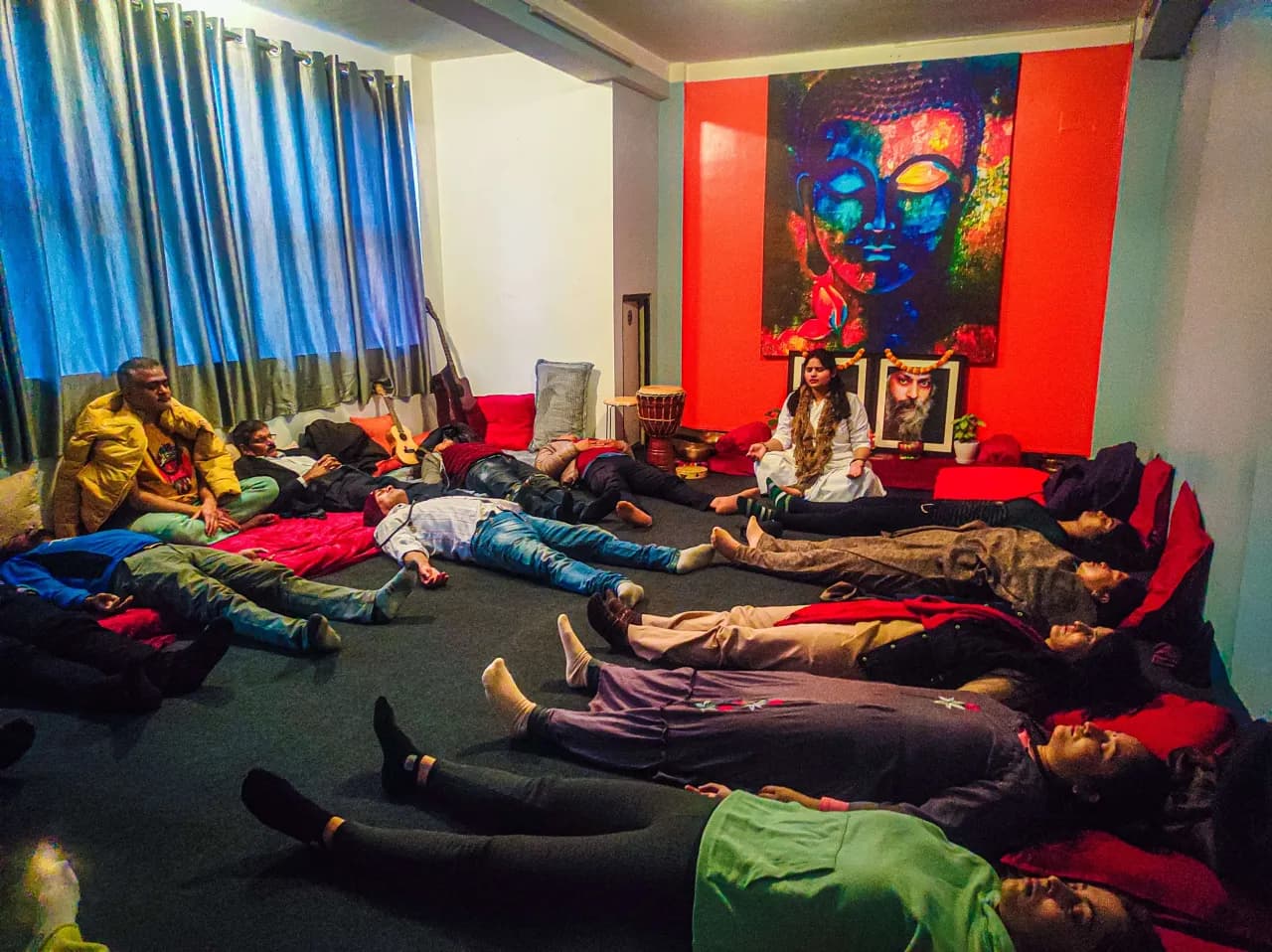
30 Minutes. Sound, Gesture, Geometry. Take-Home Practice.
Mantra, Mudra and Yantra Healing in Kathmandu
A 30-minute classical tantric healing session that combines sacred sound (mantra), hand gesture (mudra) and sacred geometric focus (yantra) into one steady practice the nervous system can rest into, at Jivan Parivartan in Tarkeshwor with Maa Nisha Kabir or Swami Anish.
What is mantra, mudra and yantra healing?
Mantra, mudra and yantra healing is a 30-minute session that gives the mind, body and attention three simultaneous anchors. Mantra is a repeated sacred sound for the mind. Mudra is a hand gesture for the body. Yantra is a sacred geometric diagram for the eyes. When all three are held together, the nervous system settles faster than with any single technique on its own.
In Sanskrit, mantra literally means a sound that protects. In practice, a mantra is a short, repeated syllable or phrase that gives the mind something steady to rest on instead of restless thinking. A mudra is a precise hand position that creates a small physiological signal of stability and inward attention. A yantra is a geometric diagram (most often a series of concentric squares, triangles and a central point) that the eyes can rest on without the usual scanning pattern of visual attention.
Used together, these three are a complete subtle-body intervention. The mind has less to do because the sound is doing some of the work. The body has less to do because the gesture is doing some of the work. The eyes have less to do because the diagram is doing some of the work. Within a few minutes, most clients are in a quiet, focused, alert rest that is genuinely difficult to reach by sitting still and trying to think nothing.
The session is short because the technique is concentrated. The point is not to be in the room for a long time. The point is to give you a working daily practice you can take home and continue, ten to twenty minutes a day, after the session is over.
Where does this come from, and is it really tantra?
Yes, it is tantric, in the original sense of the word. Tantra in classical Indian thought is a vast body of practical methods for working with sound, breath, gesture, geometry and the subtle body. Much of what is now called yoga (kundalini, mantra practice, chakra work, bandha and mudra) comes from this tradition. We are direct about this because there is widespread confusion between the classical tantric tradition and the modern Western use of the word to describe a style of relationship coaching. They are not the same thing.
Our session is the classical work, in session form. There is no physical contact between practitioner and client beyond perhaps adjusting hand position for the mudra. There is no romantic, sexual or intimate dimension to the work. The client receives a personalised mantra, mudra and yantra combination, practises it under the practitioner's guidance for the main portion of the session, and leaves with written instructions to continue at home.
The lineage we work in is the Himalayan tradition that Maa Nisha Kabir trained in during her two-year cave retreat in the Nepalese Himalayas. Much of the same material is taught in greater depth in our 200-hour yoga teacher training, which includes a full mantra sadhana module with personalised mantra selection through birth-chart analysis.
What happens in a 30-minute session?
A mantra, mudra and yantra healing session runs in four clear stages: short check-in, settling breath, guided practice with all three anchors, and a quiet closing. You leave with written instructions for the daily home practice.
Short check-in
A few minutes to describe what you want most right now (calm, focus, grounding, emotional balance). The practitioner chooses the mantra, mudra and yantra combination based on this.
Settling breath
A simple guided breath practice to bring you into the body and slow the system before the main work begins. Most people feel the shift within two or three minutes.
Guided practice
You take up the mudra, fix attention on the yantra, and begin the mantra. The practitioner supports the practice from outside, refining pace, breath and posture as needed.
Quiet closing
A short integration in silence, then a brief conversation about the take-home practice. You leave with written instructions and a follow-up channel if you need adjustments.
The session pairs naturally with our morning meditation, where the practice you receive can be used as the day's anchor. For a deeper or longer session in the same visit, see the 60-minute chakra alignment session.
Who books this session, and when?
The session is most often booked by two kinds of client: people working with strong emotional or transitional material who want a focused practice to lean on between sessions, and serious students of meditation, yoga or healing who want a personalised daily practice rather than a generic one.
Common reasons to book
- • Persistent overthinking and a busy mind
- • Emotional reactivity during a transitional period
- • Wanting a take-home daily anchor practice
- • Yoga teachers refining their personal sadhana
- • Meditators ready to move past generic guided audio
- • Anyone drawn to mantra, mudra and sacred geometry
When this is not the right fit
- • Acute medical or psychiatric crisis (see a clinician first)
- • You want hands-on bodywork or massage
- • You expect this to replace medical care
- • You will not commit to even ten minutes of daily home practice
For a shorter or simpler reset, see 5 Elements Balancing. For a longer therapeutic session, see chakra alignment. To learn the underlying work as a teacher, see our 200-hour yoga teacher training.
Session and Fees
One session, no upsells, a daily practice to take home
Mantra, Mudra and Yantra Healing
30 minutes, in person in Tarkeshwor
- Personalised mantra, mudra and yantra combination
- Guided practice under the practitioner's supervision
- Written instructions for ten to twenty minutes a day at home
- Follow-up over WhatsApp for adjustments after the first week
$30
per 30-minute session
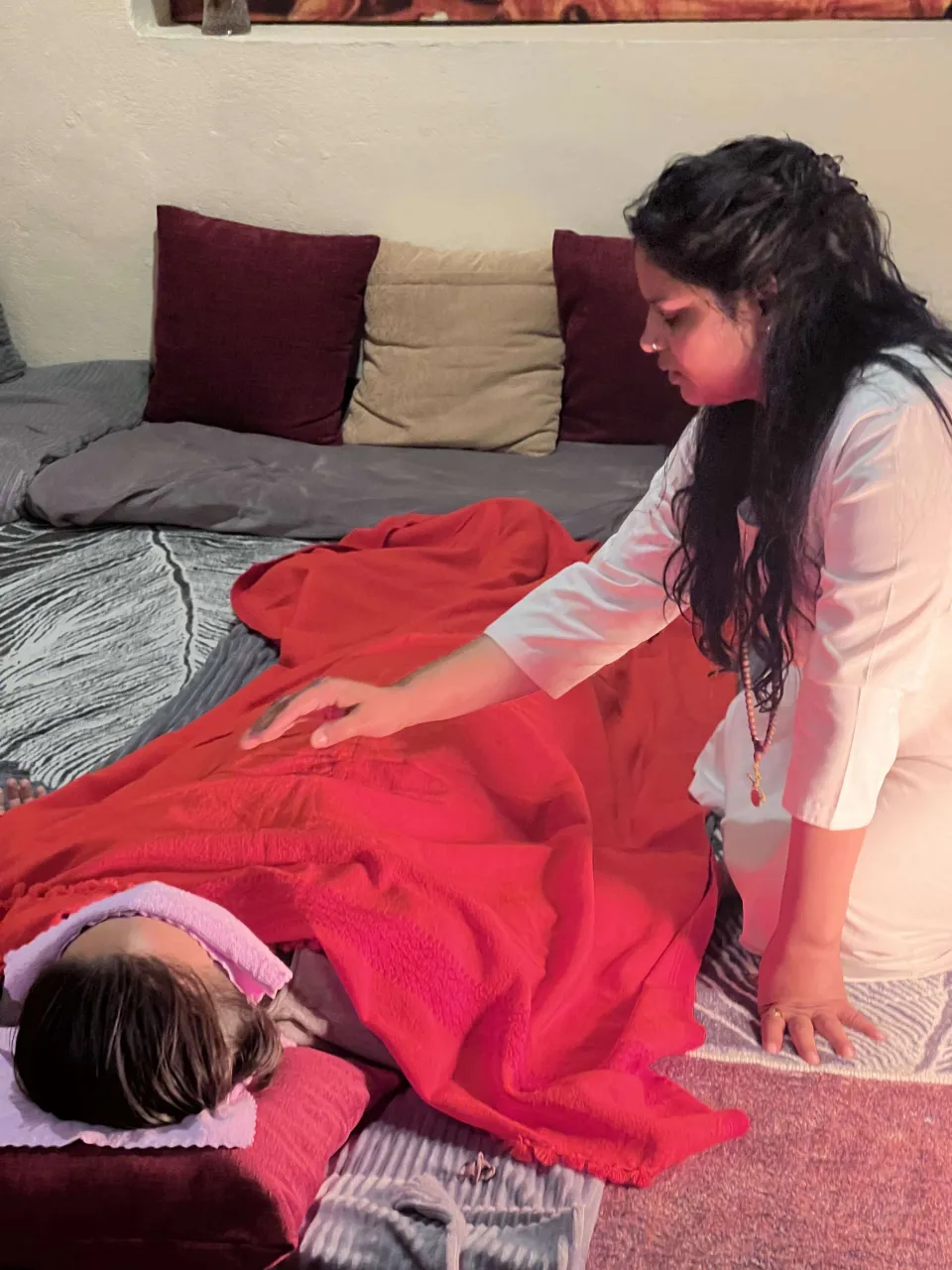
Your Practitioner
Maa Nisha Kabir
Reiki Master & Spiritual Healer
Maa Nisha Kabir founded Jivan Parivartan after a two-year silent retreat in the caves of the Nepalese Himalayas. Her path began at the age of fourteen and has been shaped by more than a decade of continuous sadhana, study with teachers in Nepal and India, and over six years of full-time professional healing work. As a Reiki Master and spiritual guide she has supported more than eight thousand individuals through one-to-one Reiki, sound healing, meditation and counselling, with a particular focus on chronic stress, anxiety and emotional trauma.
Mantra, mudra and yantra is a particular speciality of Maa Nisha's. Her approach to choosing the combination is unhurried and conservative: she would rather give you a simpler practice you will actually do for a month than an elaborate one you will abandon after a week. The follow-up after the session is part of the work.
Co-founder Swami Anish also offers this session, particularly for clients combining the practice with meditation guidance or clinical hypnotherapy.
Client Voices
What clients say about the work at Jivan Parivartan
“The two years she spent in Himalayan caves shine through her teaching. Her meditation guidance is unlike anything I have experienced. Authentic, powerful and deeply transformative.”
“I came to Jivan Parivartan with deep emotional wounds. Through Maa Nisha’s sound healing and spiritual counselling, I found healing I did not think was possible. Eternally grateful.”
Mantra, mudra and yantra healing: questions clients ask
Related sessions and pages
Read about the wider energy healing sessions hub, try a 30-minute 5 Elements Balancing session for a broader reset, book a deeper 60-minute chakra alignment session, or go further with meditation guidance in Kathmandu.
Book a 30-minute mantra, mudra and yantra session in Kathmandu
Tell us what you want most right now (calm, focus, grounding or emotional balance) and we will reply with the next available slot and choose the right combination for you.